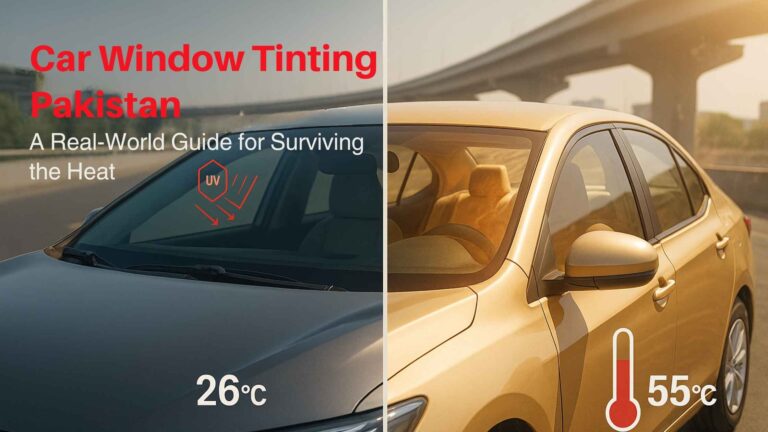
I’ll never forget the panic on my friend Waheed’s face when a traffic warden pulled him over on Mall Road last summer. His crime? Tinted windows on his Honda City.
The thing is, Waheed actually needed those tints for a legitimate medical reason—he has photosensitivity issues that make bright sunlight genuinely painful. But he’d never bothered getting the proper exemption paperwork, assuming nobody would care.
That assumption cost him 5,000 rupees in fines and three hours at the traffic police office. It could have been avoided entirely if he’d just spent a weekend getting the proper exemption sorted.
Look, I get it. The process of obtaining legal permission for tinted windows in Punjab seems complicated and bureaucratic. Most people either skip tints altogether or install them and hope they don’t get caught. But here’s the reality: Punjab traffic police have gotten much stricter about window tints over the past year, especially in major cities like Lahore, Rawalpindi, and Faisalabad.
The good news?
Getting a legitimate exemption isn’t nearly as difficult as people think. I’ve helped four different friends and family members through this process in the past year alone, and I’m going to walk you through exactly how it works in 2026, step by step, in plain language.
Why Punjab Has Strict Tint Laws in the First Place
Before we get into the how-to, let’s talk about why these laws exist. Understanding the reasoning helps you navigate the system better.
The main concern is security. Dark tints make it impossible to see who’s inside a vehicle, which creates risks for law enforcement and security checks.
After various security incidents over the years, authorities decided they needed clear visibility into vehicles for public safety reasons.
The second concern is identification. If a vehicle is involved in a crime or traffic incident, witnesses and cameras need to be able to see the occupants. Heavy tints make this impossible.
Third, there’s the issue of traffic safety. Some extremely dark tints reduce the driver’s visibility at night or in poor weather, increasing the risk of accidents.
These are legitimate concerns, which is why the exemption system exists rather than an outright ban. If you have a valid reason for needing tints—medical conditions, security concerns, or specific vehicle types—the system allows for it. You need to follow the proper procedure.
What the Actual Law Says About Tints
Let me clarify what’s legal and what’s not under the current Punjab traffic regulations.
The law specifies maximum Visible Light Transmission (VLT) percentages for different windows. VLT is basically how much light passes through the tint—a lower percentage means a darker tint.
For standard private vehicles without exemptions:
- Front windshield: 70% VLT minimum (very light tint only on the top strip)
- Front side windows: 50% VLT minimum (moderately light tint)
- Rear side windows and back windshield: 30% VLT minimum (can be darker)
Most people want darker tints than these limits allow, especially for front windows. That’s where exemptions come in.
With a proper medical or security exemption, you can legally go darker:
- Front side windows: Can go down to 30% VLT
- Rear windows: Can go as dark as 20% VLT
- Windshield: Still restricted to light tint on the top portion only
It’s worth noting that even with an exemption, you cannot have completely blacked-out windows. There are limits even for exempt vehicles, mainly for security checkpoint purposes.
Who Actually Qualifies for a Tint Exemption
This is the first question everyone asks: “Do I actually have a valid reason for an exemption?”
The Punjab traffic authorities recognize several legitimate grounds for exemptions:
Medical Reasons (most common for private individuals):
- Photosensitivity disorders
- Skin conditions aggravated by UV exposure (like lupus, certain types of dermatitis)
- Eye conditions that make bright light painful or damaging
- Recent eye surgery requiring light protection during recovery
- Certain medications cause light sensitivity as a side effect
- Migraines triggered by bright light
Security Reasons:
- Government officials with security threats
- Judges, prosecutors, or others in sensitive legal positions
- Business owners or executives with demonstrated security concerns
- Diplomatic vehicles
- Security company vehicles
Vehicle Type Exemptions:
- Ambulances
- Official government vehicles
- Certain commercial vehicles with specific needs
The medical category is by far the easiest and most common route for private citizens. If you have any legitimate medical condition that’s worsened by sun exposure or bright light, you very likely qualify.
The Complete Step-by-Step Process for 2026
Right, let’s get into the actual process. I’m breaking this down into detailed steps because missing any one step can delay your application by weeks.
Step 1: Get Your Medical Documentation
This is your foundation. You need legitimate medical evidence of your condition.
Visit a registered medical practitioner—ideally a specialist relevant to your condition. If it’s an eye issue, see an ophthalmologist. If you have a skin condition, see a dermatologist—the more specialized the doctor, the more weight their documentation carries.
Explain that you need medical documentation supporting a tinted window exemption due to light sensitivity or UV exposure concerns related to your condition.
The doctor needs to provide a letter on their official letterhead that includes:
- Your full name and CNIC number
- Clear diagnosis of your medical condition
- Specific explanation of why this condition requires reduced light/UV exposure
- Recommendation that window tints are medically advisable for your health
- Doctor’s signature, stamp, and registration number
- Date of examination
Cost for this step: Typically 1,500-3,000 rupees for the consultation and letter, depending on the specialist.
Step 2: Get Your Medical Certificate Attested
Your doctor’s letter needs official attestation to be accepted by traffic authorities.
Take your medical documents to a government hospital or a notary public for attestation. In Lahore, the main government hospitals, such as Services Hospital, Mayo Hospital, and Jinnah Hospital, can do this. In other cities, any major government hospital works.
Some people ask whether they can skip this step—don’t try it. Unattested medical letters get rejected by traffic police almost every time, and you’ll have to start over.
Step 3: Prepare Your Vehicle Documentation
While you’re handling medical documents, gather your vehicle paperwork:
- Original vehicle registration book (and photocopy)
- Copy of your CNIC (front and back)
- Copy of vehicle registration (both sides)
- Proof of current insurance
- Recent photograph of your vehicle (showing all windows clearly)
Make sure your vehicle registration is up to date. If your token tax has expired or there are any pending challans, sort those out first. Applications are rejected if your vehicle documentation isn’t in order.
Step 4: Apply at the Excise and Taxation Office
This is where things get official. You need to submit your application at your local Excise and Taxation Office—the same place where you pay token tax.
In Lahore, the main office is on Empress Road, but there are also offices in Cantt, Model Town, and other areas. Check which one serves your area based on your vehicle’s registration district.
At the office, ask for the “Window Tint Exemption Application” form. Fill it out completely with:
- Your personal details (name, CNIC, address, contact number)
- Vehicle details (registration number, make, model, year, engine/chassis numbers)
- Reason for exemption (medical/security/other)
- Desired VLT percentage for each set of windows
Attach all your documents:
- Attested medical certificate and supporting documents
- CNIC copies
- Vehicle registration copies
- Vehicle photographs
- Any additional supporting documentation
Submit everything to the designated counter. They’ll give you a receipt with an application tracking number. Keep this safe—you’ll need it to check your application status.
Application fee: Currently around 2,000-3,000 rupees for processing. This varies slightly by district.
Step 5: The Verification Process
After submission, your application goes through a verification process that typically takes 2-4 weeks in 2026. Here’s what happens:
- The excise department verifies your vehicle registration and ownership
- Medical documentation gets reviewed by designated officers
- In some cases, they may contact your doctor to verify the letter (this is rare but possible)
- Your application gets forwarded to the traffic police department for security clearance
- Traffic police verify that there are no security concerns with granting the exemption
You can check your application status online through the Punjab Excise portal (excise.punjab.gov.pk) using your tracking number. Most district offices also have a helpline you can call for updates.
If there are any issues with your application—missing documents, unclear information or expired paperwork—they’ll contact you by phone or SMS at the number you provided. Respond immediately if you get such a notification, as you’ll have a limited time window to address the issue.
Step 6: Police NOC (No Objection Certificate)
Once the excise approves your application on the documentation side, it is forwarded to the traffic police for security clearance.
For most private individuals with medical exemptions, this is usually straightforward. The police verify:
- You have no criminal record that would raise security concerns
- The vehicle isn’t stolen or involved in any cases
- The vehicle registration and ownership are legitimate
This verification typically takes 1-2 weeks. In most cases, you don’t need to do anything during this step—it’s handled automatically between departments.
However, if you’re applying on security grounds rather than medical grounds, you may need to appear in person at the police station with additional documentation to substantiate your security concerns.
Step 7: Receiving Your Exemption Certificate
If everything checks out, you’ll receive an approval notification via SMS to your registered mobile number. You’ll be instructed to visit the excise office to collect your official exemption certificate.
Bring your original application receipt, CNIC, and vehicle registration book. At the office, you’ll receive:
- Official tint exemption certificate with your photo, vehicle details, and approved VLT percentages
- A small sticker to display on your windshield indicating you have a legitimate exemption
- Documentation explaining the terms and validity period of your exemption
The exemption certificate is typically valid for 2-3 years for medical exemptions (depending on your condition), after which you need to renew with updated medical documentation.
Step 8: Getting Your Windows Tinted
Now you can finally get your tints installed legally.
Important points about installation:
Only go to reputable installers: Get your tints installed by a professional service that understands the legal requirements and can guarantee the correct VLT percentages. Bad installation that exceeds your approved darkness level can still get you in trouble.
Keep your installation receipt: The receipt should specify the exact VLT percentages installed on each window. Keep this with your vehicle documents as additional proof of compliance.
Match your exemption limits exactly: If your certificate allows 30% VLT on front windows, don’t install 20%. Stick to your approved limits. Officers can and do check with VLT meters.
The installer can help you choose films that exactly match your exemption certificate specifications.
What Happens When You Get Stopped by Traffic Police
Even with a legitimate exemption, you’ll likely still get stopped occasionally by traffic police—dark windows automatically attract attention. Here’s how to handle these stops smoothly:
Stay calm and courteous: Being defensive or argumentative never helps, even when you’re completely right.
Explain politely: “Sir, I have a medical exemption certificate for these tints” works much better than “It’s legal, I have papers.”
Let them verify: Officers may carefully check your documents or even use a VLT meter to measure the darkness of your tint. This is their job—cooperate fully.
Know your rights: If an officer insists your legal tint is illegal despite your exemption certificate, politely but firmly request to speak with their superior or ask them to verify with the excise department. Don’t let them intimidate you into paying a bribe for legal tints.
In my experience helping friends with exemptions, legitimate stops where you produce a valid exemption certificate usually end within 5 minutes with a “Okay, sir, no problem, you can go.” Officers aren’t trying to harass people with legitimate exemptions—they’re looking for people with illegal tints who lack paperwork.
The sticker on your windshield (provided with your exemption) also helps. Many officers will see it and not even bother stopping you, or they’ll glance at your certificate and wave you through.
Renewing Your Exemption Certificate
Your exemption certificate isn’t permanent. Medical exemptions are typically valid for 2-3 years, depending on your condition and what was specified in your original medical documentation.
About two months before your exemption expires, start the renewal process. It’s much simpler than the initial application:
- Get updated medical documentation from your doctor confirming your condition persists, and you still require tints
- Get the updated documents attested (same process as before)
- Submit a renewal application to the excise office with your expiring certificate, new medical documents, and vehicle registration.
- Pay renewal fee (usually about 1,500-2,000 rupees)
- Receive renewed certificate within 1-2 weeks (faster than initial application since you’re already in the system)
Don’t let your exemption expire. If you’re driving with tints but your exemption certificate has expired, you’re technically illegal and can be fined. Set a phone reminder for two months before expiration to start the renewal process.
Using Autostore.pk for Your Tinting Needs
Once you have your exemption certificate, getting quality tints installed becomes crucial. This is where Autostore.pk comes in.
Autostore carries a range of window tinting films from reputable brands that comply with legal VLT requirements. Whether you need 50% VLT, 30% VLT, or any specific percentage, you can find films that match your exemption specifications exactly.
Why buy from Autostore?
Quality assurance: All tinting products are genuine, from known manufacturers. No fake or substandard films that change in darkness over time.
Proper specifications: Products clearly state VLT percentages so you can match your exemption certificate precisely.
Expert guidance: Autostore’s team can help you select the right tint for your needs and exemption specifications. Call 0321-2111-406 or WhatsApp 0302-2111-406 for personalized assistance.
Nationwide delivery: Order from anywhere in Pakistan. Free delivery over Rs. 3,000.
Installation support: While Autostore primarily sells products rather than installation services, they can recommend quality installers in major cities.
Beyond window tints, Autostore offers related products that complement your tinted windows:
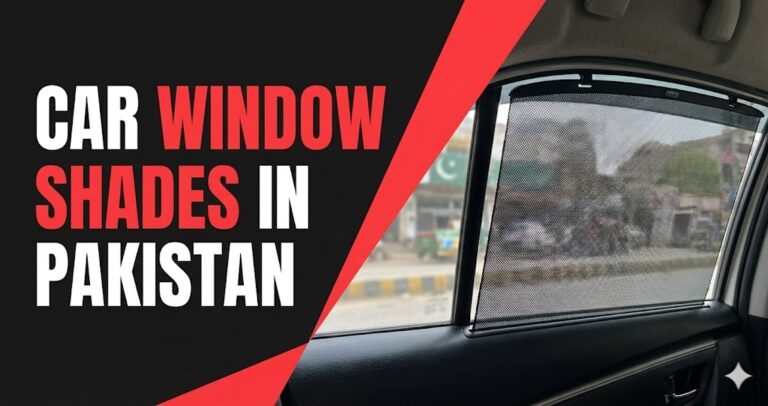
- Sun shades for additional sun protection
- Interior accessories to keep your cabin cool
- Car care products to maintain your tints properly
Quality tinting films from Autostore.pk range from budget-friendly dyed films to premium nano-ceramic options. For someone investing time and money in an exemption certificate, it makes sense to invest in quality tints that will last the full 2-3 years of your exemption period without fading or bubbling.
Tips for Maintaining Your Tinted Windows
Once you’ve got legal tints installed, take care of them properly:
Wait before rolling down the windows: New tints need 3-5 days to cure fully. Don’t roll your windows down during this period, or the film can peel.
Clean properly: Use soft microfiber cloths and tint-safe cleaners. Regular glass cleaner with ammonia can damage the tint film over time. Check Autostore’s car care section for tint-safe cleaning products.
Keep your exemption visible: The small exemption sticker should be displayed on your windshield where officers can see it. Don’t remove or damage it.
Always carry documentation: Keep a copy of your exemption certificate in your vehicle at all times. You never know when you’ll get stopped.
Good maintenance means your tints will look great and stay within legal VLT limits throughout your exemption period.
FAQs: Tinted Windows Exemption, Punjab
Q: I have a medical condition, but haven’t been officially diagnosed by a specialist yet. Can I still apply for an exemption, or do I need to see a specialist first?
You absolutely need to see a specialist and get a proper diagnosis before applying for an exemption. The excise and traffic authorities won’t accept self-diagnosed conditions or generic letters from family doctors saying you “might benefit” from tints. Here’s why this matters: the entire exemption system is based on verifiable medical evidence from qualified specialists who can definitively say you have a specific condition requiring light protection. Start by booking an appointment with the appropriate specialist—an ophthalmologist for eye issues, a dermatologist for skin conditions, a neurologist for migraine-related photosensitivity, etc.
Q: My exemption certificate allows 30% VLT on front windows, but the tint installer says 20% would still be “safe” and looks better. Can I go darker than my certificate allows, or do I need to stick exactly to the percentages specified?
Stick exactly to your certificate specifications—do not go darker than allowed, even if your installer says it’s fine. Here’s the reality: traffic police are increasingly using VLT meters at checkpoints, especially in Lahore and other major cities. These handheld devices measure the exact percentage of light transmitted through your windows in seconds. If your certificate says 30% but your actual tints measure 20%, you’re technically in violation even with a valid exemption. The certificate is a legal document specifying the maximum allowed darkness—it’s not a suggestion or guideline. Officers who check and find that your tints exceed your allowance can still fine you, and your argument that “the installer said it was okay” carries zero legal weight.
Q: I got my tint exemption certificate six months ago, but haven’t installed tints yet because of budget constraints. Is my certificate still valid, or does it expire if I don’t use it immediately? Also, when the 3-year validity period expires, does that count from the certificate issue date or from the date I actually installed the tints?
Your exemption certificate remains valid from its issue date, regardless of when you actually install tints—there’s no requirement to install immediately after receiving the certificate. This is actually good news for people on tight budgets: you can get your exemption certificate first (which costs about 4,000-7,000 rupees for the application and documentation), then save up over several months for quality tint installation. The certificate doesn’t become invalid just because your windows aren’t tinted yet. However, please note that the validity period (typically 2-3 years for medical exemptions) starts on the certificate issuance date, not your installation date. So if your certificate was issued in January 2026 with a 3-year validity, it expires in January 2029, whether you installed tints in February 2026 or December 2026.
Final Thoughts on Tint Exemptions in Punjab
Getting a tinted windows exemption in Punjab requires patience and proper documentation, but it’s absolutely achievable if you have legitimate grounds.
The process isn’t designed to be impossible—it’s designed to filter out people who want dark tints for purely aesthetic reasons while accommodating those with genuine medical or security needs.
If you have a real medical condition aggravated by sun exposure, don’t suffer through it or risk illegal tints. Take the time to get a proper exemption. The one-time investment in the process buys you years of legal protection, health benefits, and peace of mind.
If you have questions about choosing the right window tints once you have your exemption, reach out to Autostore.pk at 0302-2111-406. They can help you select tinting films that precisely meet your legal VLT requirements while delivering maximum heat rejection and UV protection.
Your health matters. Your legal compliance matters. With proper exemptions and quality tints, you don’t have to choose between them.