You’re already late for work. You turn the key, and instead of your engine roaring to life, you hear that pathetic clicking sound. Or worse, complete silence. Dead battery. It happens to everyone eventually, and in Pakistan’s traffic and weather conditions, it happens more often than you’d think.
Jump-starting isn’t complicated, but mess it up, and you can destroy your car’s electronics, wreck the battery, or even cause an explosion. Not joking about that last part. Batteries contain sulfuric acid and release hydrogen gas. Connect things the wrong way, and those sparks can set off something you really don’t want to happen.
This guide walks you through the safe way to do it, which gear actually holds up in our conditions here, and what you should keep in your boot so you’re not stranded hoping someone stops to help.
Why Car Batteries Die in Pakistan
Our roads absolutely destroy batteries. All that bumper-to-bumper traffic in Lahore and Karachi means the alternator never gets enough time to charge things back up properly. Those quick five-minute runs to the store do nothing. Batteries need a solid stretch of driving to recover after you crank the engine.
The summer heat here is brutal. Batteries dry out fast when it’s 45 degrees outside. Heat cranks up the chemical reaction happening inside, which sounds like it’d help but really just burns through the internals faster. A battery meant to last four years can die after just two Karachi summers.
Winter mornings in northern areas create the opposite problem. Cold temperatures slow down the chemical reaction that produces electricity. Your battery might be fine, but it just can’t deliver enough power to turn over a cold engine. This is temporary, but it leaves you stranded until things warm up or you get a jump.
Leaving lights on, running the AC while parked, phone chargers plugged in overnight… these slowly drain your battery. Modern cars have computers and security systems that draw power even when the car is off. If you don’t drive for a week, you might come back to a dead battery through no fault of your own.
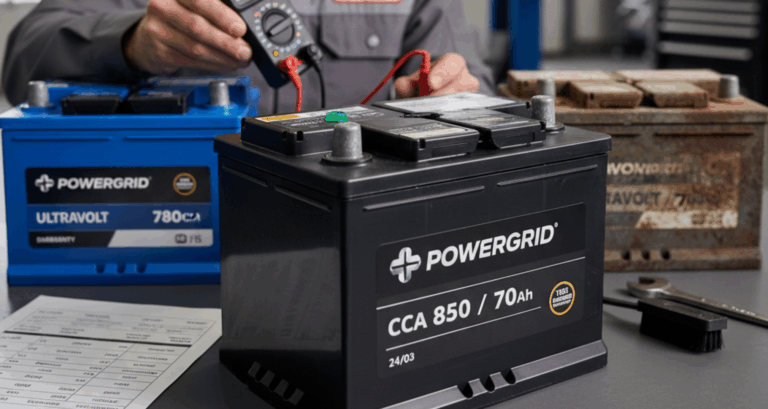
Old batteries are the most common culprit. Most people let their original battery die completely instead of replacing it proactively. By year three, your battery is living on borrowed time. Get it tested at any auto shop. Autostore.pk also stocks quality replacement batteries if yours is past saving.
What You Need for Jump Starting
The traditional method needs jumper cables and another car with a working battery. Cables come in different thicknesses (measured in gauge). Lower numbers mean thicker cables. For our cars, 4-gauge or 6-gauge cables work well. Thin cables overheat and don’t transfer enough current for bigger engines.
Cable length is important. Get at least three meters. Five is even better because you won’t always be able to pull right up next to the car helping you. Wrestling with cables that are too short just makes everything harder and more dangerous. Make sure the clamps are proper copper or copper-clad, not that flimsy aluminium rubbish that can barely hold on and causes all sorts of resistance problems.
Portable jump starters are a total game changer.
They’re just rechargeable battery packs that come with built-in cables—no hunting for another car to help you. Toss one in your trunk, and when the second car’s battery dies, plug it in and start the car yourself. Yeah, they’re not exactly cheap, but the convenience alone makes them worth every rupee.
Look for jump starters rated for your engine size. Small petrol engines need less power than big diesel SUVs. Check the peak amps and cranking amps ratings. For most sedans and hatchbacks in Pakistan, 400 to 600 peak amps works fine. SUVs and diesels need 800+ peak amps.
They cost more upfront, but they work when it counts. Some models include USB ports to charge your phone, built-in flashlights, and even air compressors.
Keep your jump starter charged. Most hold a charge for months, but check it every two months and top it up. There’s nothing worse than pulling out your emergency jump starter only to find it’s as dead as your car battery.
The Right Way to Jump Start With Cables
Pull the working car close enough that the cables reach both batteries easily, but don’t let the cars touch. If they’re touching, it creates a ground connection that messes things up.
Stick both cars in park, or neutral if you’re driving manual, and switch off absolutely everything. Lights, AC, radio, phone chargers, the works.
Open both bonnets and find the batteries. Most of the time they’re right there in plain sight, but some cars tuck them under plastic covers or even stick them in the boot. If you can’t spot it, check the manual. You need to find the positive and negative terminals. Positive has a plus sign and usually a red cover or red cable attached. Negative has a minus sign and is usually connected to a black cable.
Get rid of any crusty buildup before you hook up the cables. That white or bluish crud sitting on the terminals stops electricity from flowing properly. Scrape it off with a screwdriver or wire brush. Don’t go touching it with your bare hands, though. It’s acidic and will irritate your skin.
Connect in this exact order. First, attach one red clamp to the positive terminal of the dead battery. Then attach the other red clamp to the positive terminal of the good battery. Now the black clamp goes to the negative terminal of the good battery. Here’s where people mess up: the final black clamp does NOT go to the negative terminal of the dead battery.
Why does this matter? When you make that final connection, you’ll see a small spark. That’s normal. But if that spark happens right at the battery terminal and there’s hydrogen gas present, boom. It’s rare, but it happens, and it’s completely avoidable by grounding to the engine instead.
Double-check that all four connections are tight and on the right terminals. Loose clamps create resistance and heat. Wrong polarity can damage electronics or cause the battery to explode. Take your time here.
Keep the jumped car running for at least 20 to 30 minutes. Drive it around; don’t just idle. The alternator needs time to recharge the battery. If you shut off too soon, you’ll be stuck again.
Using a Portable Jump Starter
These are so much simpler. Make sure the unit is charged before you start. Most have LED indicators that show the charge level. Turn off your car’s ignition and accessories.
Connect the red clamp from the jump starter to your battery’s positive terminal. Connect the black clamp to the negative terminal. Some units let you connect to an engine ground, such as via the cable method; check your model’s instructions.
Turn on the jump starter if it has a power button. Some activate automatically when you connect them. Wait about 30 seconds for the charge to flow into your battery. Then start your car normally.
Once it starts, turn off the jump starter and disconnect it. Start with the black clamp, then the red. That’s it. The whole process takes two minutes. No finding another car, no asking strangers for help, no waiting an hour for a friend to show up.
What Not to Do
Don’t mix up the connections. Positive goes to positive, negative goes to ground. Swap these around and electricity flows backwards through all the delicate electronic bits. Cars today are packed with computers, sensors, and control modules that cost a fortune to replace. One backwards hookup can kill a lot of them.
Never let the cable clamps touch each other while connected to a battery. Even just the two clamps from the same end. This creates a direct short circuit. Best case, you blow a fuse. Worst case, you melt the cables or damage the battery.
Don’t try jump-starting a frozen battery either. If you can see ice or the battery feels rock-solid from the cold, leave it alone. Forcing a charge into frozen cells can crack the case or destroy what’s inside. Wait for it to thaw out naturally. This is mostly a problem up north during winter.
Stop after three or four tries if nothing’s happening. Sitting there cranking it ten times in a row won’t help. Your battery could be completely shot, or maybe the starter motor gave up, or the alternator died. Whatever it is, you’re just killing the good battery and burning up parts by continuing. Know when to quit and call for real help.
Safety Gear and Precautions
Keep a pair of gloves in your car. Nothing fancy, just regular work gloves. Battery acid will burn your skin, and those terminals can be sharp or covered in rough corrosion. Gloves keep your hands safe while you’re doing all this.
Safety glasses aren’t overkill. That spark when connecting cables can sometimes cause a battery to vent gas or even spray acid if something goes very wrong. Your eyes are worth protecting for the 30 rupees a pair of basic safety glasses costs.
Keep a wire brush or battery terminal cleaner in your toolkit. Cleaning terminals before jumping improves the connection and makes everything work better. You can find these at any auto parts shop or through Autostore.pk’s tools section.
Check for leaks before touching anything. If your battery is leaking acid, don’t proceed. Contain the leak with something absorbent like cat litter or sand if you have it. Then call for proper help. Battery acid will eat through clothing, skin, and concrete.
After the Jump: What Comes Next
Your car started, great. But why did the battery die in the first place? If it’s an old battery that’s been weak for a while, replacement is the answer. Don’t wait for it to leave you stranded again.
If the battery is relatively new, something else is wrong. Your alternator might not be charging properly. The belt could be loose or worn. There might be a parasitic draw from faulty electronics or something you left plugged in.
Get the battery and charging system tested. Most workshops do this for free or at a low cost. The test takes five minutes and tells you whether the battery itself is bad, the alternator is failing, or everything’s fine and it was just a one-time drain.
If you’ve needed a jump more than once this month, stop pretending everything’s fine. Keep jump-starting over and over, and you’re just killing the battery faster. Sort out whatever’s actually wrong before you end up stranded somewhere sketchy or miles from anywhere.
Think about getting a bigger battery if you’ve added a bunch of stuff to your car. Aftermarket sound systems, extra lights, multiple phone chargers, dashcams-, all that pulls power constantly. The original battery your car came with probably wasn’t meant to handle all of it. Bump up to the next size for better performance, and it’ll last longer too.
Best Products Available in Pakistan
Autostore.pk has jumper cables from brands you can actually trust. Go for Kenco or Guard cables with the right thickness and length. They come in their own cases and will last you for years. Those cheap ones you find at roadside stalls might get you through once or twice before the clamps snap off or the wire rots from the inside.
For portable jump starters, Anker models are the gold standard. The Roav Jump Starter Pro can jump-start cars with up to 8.0L gas engines or 6.0L diesel engines. It includes dual USB charging ports and an LED flashlight, and it comes in a protective case. One charge is good for 40+ jump starts if you somehow needed that many.
Cable & Jump Starters category on Autostore.pk has multiple options at different price points. Free delivery over Rs. 3,000 and cash on delivery mean you can get professional equipment without leaving your house or dealing with dodgy payment methods.
Battery terminal protectors and anti-corrosion spray prevent the crusty buildup that interferes with jump-starting. Spray the terminals after cleaning them or when installing a new battery. This gives you reliable connections and easier maintenance.
Pakistani Driving Conditions and Battery Care
Our fuel quality affects batteries indirectly. Bad petrol makes engines run rough, which puts strain on the electrical system and alternator. This leads to inconsistent charging and premature battery failure.
Traffic jams are battery killers. Sitting in traffic with the AC blasting, lights on, and music playing drains the battery faster than the alternator can recharge it at idle. Your alternator is most efficient at higher RPMs when driving. Lots of city traffic means lots of discharge cycles that wear out batteries.
Load shedding affects people who work from home and use their cars as mobile offices. Running laptops, charging stations, and other accessories off your car battery during power cuts will kill it fast. Get a proper inverter or generator instead of draining your car battery.
Dusty conditions in cities like Multan, Faisalabad, and interior Sindh coat everything in fine particles. This dust mixes with battery acid vapors, creating that corrosive gunk around the terminals. More frequent cleaning is needed compared to cleaner environments.
What to Keep in Your Car
In addition to jump-starting equipment, a complete emergency kit includes other essentials. A first aid kit for injuries. A fire extinguisher for electrical or fuel fires. Spare fuses because modern cars blow fuses more often than old ones.
A reflective warning triangle or hazard markers keep you safe if you’re stopped on the roadside. Other drivers need to see you from a distance, especially at night. These are legally required in some areas and just smart everywhere else.
A basic toolkit covers minor repairs and adjustments. Screwdrivers, pliers, an adjustable wrench, electrical tape, and zip ties can fix a surprising number of problems temporarily until you reach a proper shop.
Charged power bank for your phone separate from your jump starter. If your jump-starter battery dies, you still need your phone to work so you can call for help. Keep a small power bank charged and in the glove box.
Keep a copy of important numbers written down. Your phone might be dead or lost when you need help. A paper list of emergency contacts, your mechanic, insurance company, and trusted friend or family who can help gets you assistance even without your phone.
The owner’s manual actually helps in emergencies. People ignore these, but they contain specific information about your car’s battery location, jump-start procedures, and warnings about unique requirements for your model. Keep it in the car, not in your house.
FAQs: Jump Start Car
Can I use my portable jump starter on bikes and motorcycles too?
Yes, but you need to be careful. Car jump starters pack way too much power for bike batteries, and you can wreck them if you’re not paying attention. First, check if yours has a motorcycle mode or a low-voltage setting.
If it does, perfect, use that. If it doesn’t, you can still make it work, but only hook it up for a couple of seconds and keep it on the lowest setting. Bike batteries are tiny compared to car batteries, and they just can’t take that kind of hit.
There are also jump starters made specifically for motorcycles that put out way less power, which is exactly what you want for a bike.
How long does a portable jump starter hold its charge when not in use?
Most quality units, like Anker, hold 70% to 80% charge for about three to six months when sitting in your trunk.
Cheap ones might drop to 50% in a month. Temperature affects this. Our summer heat drains them faster than sitting in mild weather. Check yours every two months and top it up. Don’t wait until you need it to discover it’s dead. Also, these batteries have a limited number of charge cycles, typically 300 to 500 full charges.
Using it once every few months for maintenance charging doesn’t count as a full cycle, so your unit should last for years with proper care.
What if my car has the battery in a weird location like under the back seat or in the trunk?
Many European cars and some hybrids do this. They usually provide remote jump-start terminals under the hood specifically for this reason. Look for a small red plastic cap marked with a plus sign, usually near the fuse box or along the side of the engine bay.
That’s your positive terminal for jump-starting—the negative still grounds to the engine block or a marked metal point. Your owner’s manual shows exactly where these are. Never try to run cables to a battery in the trunk or under seats. Use the designated jump points. If your car doesn’t have them and the battery truly isn’t accessible from the hood, you need professional help or to remove interior panels to reach the battery properly.
Final Thoughts on Road Safety
Pakistani roads and traffic make self-sufficiency important. You can’t always rely on help arriving quickly or on strangers with time and equipment to assist. Being able to handle common problems yourself means less time stranded and more time getting where you need to go.
Check Autostore.pk’s Cable & Jump Starters category for reliable equipment delivered anywhere in Pakistan. Free shipping over Rs. 3,000 and cash on delivery mean no risk, just quality products when you need them. Their range covers everything from basic cables to professional-grade portable starters.
Keep your car maintained, your emergency kit stocked, and your knowledge current. The few minutes spent learning proper procedures and keeping equipment ready will save you hours of frustration when batteries inevitably die at the worst possible time.