You’re finally home after sitting in traffic for an hour. The heat’s been killing you all day, and as you ease off the brake to stop in your driveway, that sound hits again. The squeal. It’s loud enough that your neighbor glances over. At red lights, you keep the windows up because you don’t want people hearing it. You know something’s off, but the car stops fine, so maybe it’s nothing serious. Maybe it’s just dust or something temporary. Except it keeps happening, and deep down, you know this isn’t going away on its own.
That brake noise is not something to brush off. A squeal can come from several things—dust, moisture, worn pads, glazed surfaces, or poor-quality pad material—but if it keeps happening, your car is asking for attention. Leave it too long, and a simple pad replacement can turn into damaged rotors, a bigger workshop bill, and brakes that do not feel as sharp or predictable when you need them most. Many drivers in Pakistan make the same mistake: they go straight for the cheapest pads on the shelf. For a Corolla or City, you might see options ranging from around Rs 3,000 to Rs 15,000, and it is easy to assume they all do the same job. After all, a brake pad is a brake pad, right?
But that thinking costs you later. Those cheap pads wreck your rotors, wear out fast, don’t stop as well, and create safety risks you can’t put a price on.
We’re going to break down exactly why budget pads squeal, what that noise means for your braking system, how they end up costing more than quality pads ever would, and why buying proper brake pads from Autostore.pk is the only move that makes sense for your wallet and your safety.
What Causes Squeaky Brakes at Low Speeds?
Brake noise can come from several sources, but when it happens consistently at low speeds, especially when you’re gently slowing down or coming to a stop, it’s almost always related to the brake pads themselves. Here’s what’s going on under the hood.
Brakes work through friction.
When you press the brake pedal, the brake pads clamp down on the rotors (those metal discs behind your wheels), and that friction slows the car. The materials in the brake pads determine how smoothly and quietly this happens.
High-quality pads use advanced friction materials that grip the rotor evenly, dissipate heat properly, and wear down gradually without making noise. Cheap brake pads use low-grade materials that don’t do any of those things well.
Hard, metallic compounds in cheap pads
Budget brake pads often contain a lot of hard metallic particles mixed with low-quality bonding agents. These hard bits don’t compress or conform smoothly to the rotor surface. Instead, they scrape and vibrate against the rotor, creating that high-pitched squeal. It’s metal grinding against metal in a way that wasn’t designed to be quiet or smooth.
Lack of proper dampening layers
Good brake pads come with shims and dampening layers built right in. These layers soak up vibrations so you don’t hear them. Cheap pads leave all that out to save a few rupees during manufacturing. What happens? Every little vibration that occurs when the pad contacts the rotor becomes audible noise. There’s nothing there to stop it. The vibrations travel straight through and come out as that annoying squeal every time you brake.
Dust and debris buildup
Cheap pads create tons of dust as they wear down, way more than quality pads ever do. That dust isn’t harmless. It’s abrasive, and it sits between the pad and rotor, grinding away and making noise.
The cheaper the pad, the faster it wears out, which means even more dust piles up. You end up in this loop where the pads wear quickly, dump more dust, that dust causes grinding and squealing, and the whole system keeps damaging itself.
It’s a mess that keeps getting worse the longer those cheap pads stay on your car.
Glazing from overheating
Cheap brake pads can’t handle heat as well as quality pads. When they get too hot (which happens easily in stop-and-go traffic in Lahore or Karachi), the pad’s surface can glaze over, becoming hard and shiny. A glazed pad doesn’t grip the rotor properly and makes a loud squealing noise, especially at low speeds when there’s less airflow to cool things down.
The Hidden Costs of Cheap Brake Pads
Here’s what actually happens over time if you buy cheap brake pads to save money:
Rotor damage and resurfacing costs
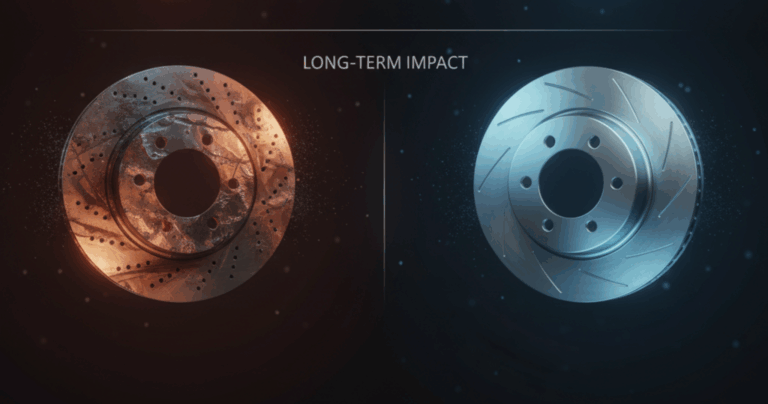
Your brake rotors are expensive. A set of front rotors for a common car like a Corolla or Civic can cost Rs 15,000 to Rs 30,000 depending on quality. Cheap brake pads, with their hard metallic particles and uneven wear, score and damage the rotor surface. Once a rotor gets grooved or warped, it needs to be resurfaced (machined flat again) or replaced entirely.
Resurfacing costs around Rs 2,-Rs 4,000 per rotor at a decent workshop. But you can only resurface a rotor so many times before it becomes too thin and unsafe. After that, you’re buying new rotors. If you had just bought quality brake pads in the first place, your rotors would have lasted years longer.
Frequent pad replacements
Cheap brake pads don’t last. A proper set should give you 40,000 to 60,000 kilometers, maybe more if you drive carefully. Cheap ones? You’re doing well if you hit 20,000 kilometers before they’re done.
That means you’re back at the shop two or three times as often, paying for new pads and installation labor every single time. It adds up faster than you think.
Here’s the actual math. Say quality pads run Rs 8,000 and go 50,000 kilometers. Cheap pads cost Rs 3,000 but die at 20,000 kilometers. Drive 100,000 kilometers, and you’ll buy quality pads twice, for a total of Rs 16,000.
Those cheap pads?
You’ll replace them five times for Rs 15,000. The difference looks tiny until you remember that cheap pads are also tearing up your rotors and you’re paying labor charges for five trips to the mechanic instead of two. Suddenly, “saving money” doesn’t look like such a bargain anymore.
Reduced Braking Performance and Safety Risks
This is where cutting corners can become a serious problem. Not every budget brake pad is unsafe, but poor-quality or incorrect pads can affect how confidently your car stops—especially when you need the brakes most.
You might start to feel it through the pedal first. It may feel softer than usual, the initial bite may not be as sharp, or the brakes may lose confidence after repeated hard stops. On wet roads, steep downhill stretches, or in sudden traffic situations, that lack of consistency becomes even more noticeable.
Caliper and other component wear
When brake pads don’t work smoothly, the calipers (the parts that push the pads against the rotor) have to work harder. Cheap pads can cause uneven pressure, sticking, and premature wear on caliper pistons and seals. Fixing or replacing a caliper costs way more than a set of quality brake pads ever would.
What Makes Quality Brake Pads Worth the Investment?
When you buy quality brake pads from a trusted brand sold through Autostore.pk, here’s what you’re actually paying for.
Advanced friction materials
Quality pads use ceramic, semi-metallic, or low-metallic formulations that are engineered for smooth, consistent braking. These materials grip the rotor evenly, generate less dust, handle heat better, and wear down slowly.
Built-in noise dampening
Premium pads come with factory-installed shims and dampening layers that absorb vibrations and eliminate squealing. You get quiet, smooth braking from day one, and it stays that way for the life of the pads.
Rotor-friendly design
Good brake pads are formulated to be kind to your rotors. They don’t score or groove the rotor surface. They wear evenly and keep the rotor smooth and flat. This extends rotor life and saves you from expensive resurfacing or replacement.
Less dust and cleaner wheels
Premium pads produce much less brake dust. Your wheels stay cleaner longer, and you’re not constantly scrubbing black dust off your rims. This also means less abrasive dust damaging your rotors and calipers.
Brand reputation and warranty
When you buy from established brands available at Autostore.pk, you’re getting products that have been tested, certified, and backed by warranties. If something goes wrong, you have recourse. Cheap no-name pads? You’re on your own.
How to Tell If Your Current Brake Pads Are Low-Quality
If you’re not sure whether the pads currently on your car are cheap or quality, here are some telltale signs:
- Constant squealing or squeaking at low speeds, especially when braking gently
- Excessive black dust on your wheels that keeps coming back no matter how often you clean
- Soft or spongy brake pedal feel, like you have to press harder to get the same stopping power
- Longer stopping distances compared to when the pads were new
- Brake pads wearing down quickly, needing replacement every 15,000 to 20,000 kilometers
If you’re experiencing any of these, it’s time to upgrade to quality brake pads and possibly get your rotors checked or resurfaced.
Installation Matters as Much as Pad Quality
Even the best brake pads won’t perform well if they’re installed incorrectly. Here’s what proper installation looks like:
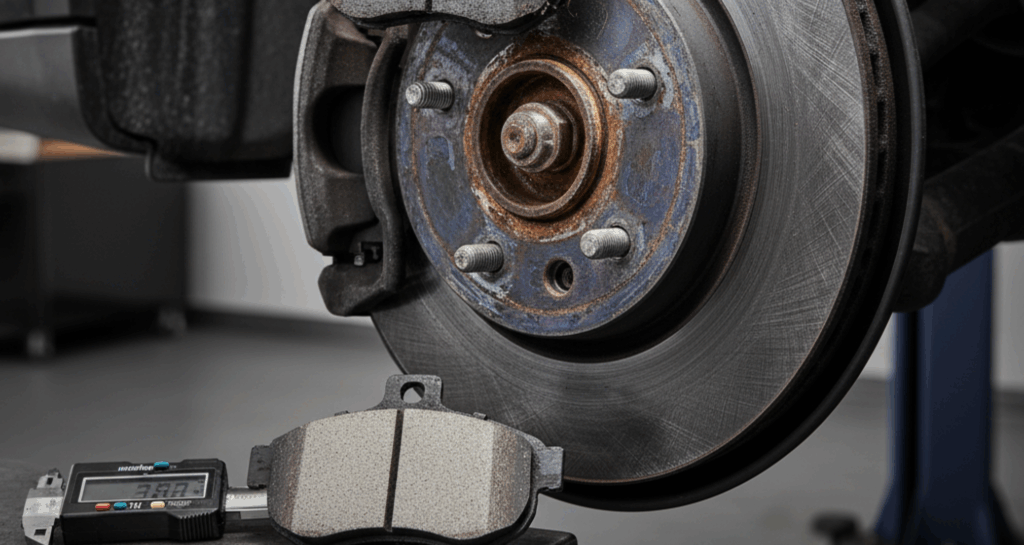
- Clean the caliper and rotor surfaces properly before installing new pads. Any dirt, rust, or old brake dust will cause noise and uneven wear.
- Apply brake lubricant (anti-squeal compound) to the back of the pads where they contact the caliper. This prevents vibration and noise. Never apply lubricant to the friction surface that touches the rotor.
- Check and lubricate the caliper slide pin to ensure the caliper moves freely. Sticky pins cause uneven pad wear and squealing.
- Resurface or replace rotors if needed. Installing new pads on damaged rotors is a waste. The pads will conform to the grooves in the rotor and wear unevenly.
- Torque all bolts to spec. Over-tightening or under-tightening can cause problems. Proper torque ensures everything sits correctly and safely.
If you’re not confident doing this yourself, have it done at a reputable workshop that understands the importance of each step. Autostore.pk offers installation support and can connect you with trusted service providers.
Why Autostore.pk Is the Right Place to Buy Brake Pads
When you’re ready to upgrade to quality brake pads, where you buy them matters as much as which brand you choose.
Autostore.pk specializes in genuine, quality auto parts for the Pakistani market. They understand the driving conditions here, the common problems people face, and which products actually work. When you buy brake pads from Autostore.pk, you get:
- Genuine branded products from trusted manufacturers, not knock-offs or counterfeit parts
- Nationwide delivery with cash on delivery so that you can order from anywhere in Pakistan
- Installation support to ensure your new pads are installed correctly and perform as they should
- Quality assurance backed by warranties and the reputation Autostore.pk has built over years
You’re not just buying brake pads. You’re buying peace of mind, safety, and long-term value for your car.
FAQs: Squeaky Brakes
Can I ignore squeaky brakes if the car still stops fine?
You shouldn’t. Squeaky brakes at low speeds are a warning sign that something is wrong with your brake pads or rotors. Even if the car is stopping now, the problem will get worse. Cheap or worn pads that square up, damaging your rotor, are turning a small, affordable problem into a big, expensive one. Plus, braking performance is already compromised; you might not notice it until you’re in an emergency and need every bit of stopping power. Get the brakes checked, replace the pads if needed, and address the root cause before it leads to rotor damage or a safety issue on the road.
Will switching to quality brake pads stop the squealing immediately?
Usually, yes, but there’s a catch. If those cheap pads have already chewed up your rotors, new pads won’t fix everything on their own.
The damage is already there. Your new pads will press against those scored, uneven rotors, and you’ll still get noise because the surface isn’t smooth anymore. How bad the squealing stays depends on how badly the rotors got messed up. Sometimes it fades after a few hundred kilometers as the pads settle in. Other times, it just keeps going until you deal with the rotors themselves.
The smart move? Get both checked at the same time. If the rotors only have light wear, throw on the good pads, and you’re sorted. But if they’re grooved or rough, either have them machined flat or replace them outright when you put in the new pad.
Are ceramic brake pads worth the extra cost for city driving in Pakistan?
Yes, definitely worth it.
Ceramic pads are made for exactly the driving we do in Pakistani cities. All that constant stopping and starting in traffic? Ceramics handle it without making a sound. Your wheels stay cleaner because they barely produce dust, and they handle heat way better than the cheap stuff. They also last much longer, so you’re not replacing them every year or two.
The upfront cost looks steep compared to budget pads, sure, but think about it this way: they last twice as long, your rotors stay healthier, and your braking stays strong the whole time. Over a few years, you actually come out ahead.
Final Thoughts: Stop Wasting Money on Cheap Brake Pads
Do not ignore brake noise, especially if it keeps occurring at low speeds or worsens over time. A squeak does not always mean the pads are worn out—it could be dust, moisture, or the pad material itself—but it is still worth having the brakes checked before a small issue turns into an expensive one.
Worn pads can eventually damage the rotors, reduce braking performance, and leave you with a much bigger repair bill than you expected. And when you are dealing with sudden stops, unpredictable traffic, or a rickshaw appearing out of nowhere, brakes are not the place to take chances.
Cheap brake pads can look like a bargain at the counter, but the real cost shows up later. Poor-quality pads may wear quickly, create excessive noise and dust, or be harder on your rotors.
If your brakes have started squealing, the pedal feels different, or you cannot remember when the pads were last inspected, get them checked. Visit Autostore.pk to find quality brake pads for your specific model and speak with someone who can help you choose the right option. Your car deserves proper stopping power—and you deserve the confidence that comes with it.