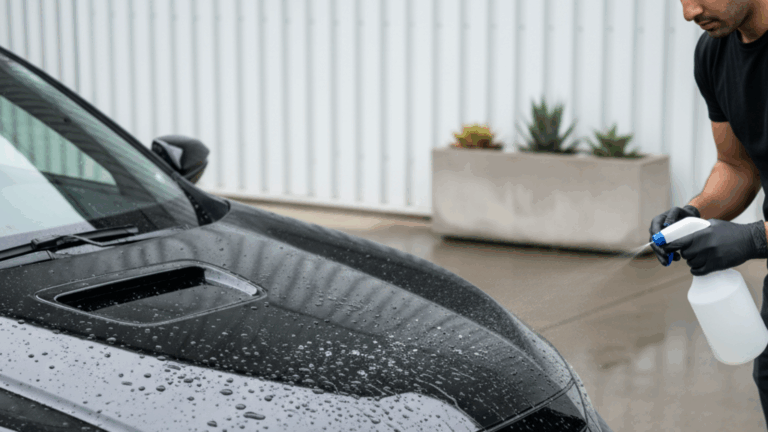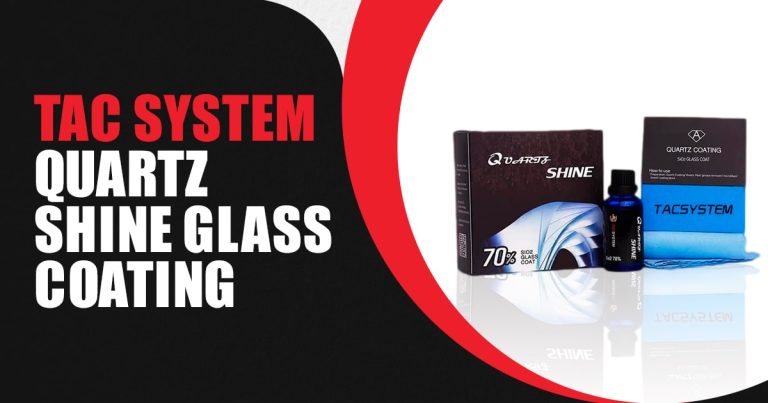
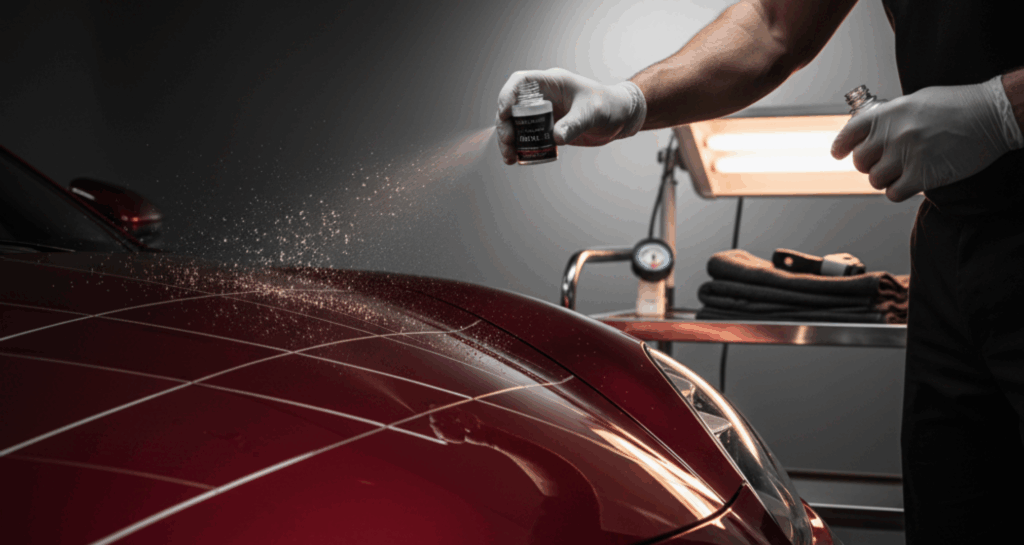
Step into any detailing shop across Pakistan and bring up the topic of ceramic coating. Watch the salesman’s eyes light up as he starts throwing numbers at you. Thirty thousand rupees. Fifty thousand. Maybe eighty thousand if you’re rolling in a Land Cruiser. Then comes the pitch for paint correction, surface prep, and whatever else he can tack on. Right next to him on the shelf sits a bottle of car wax for two thousand rupees, claiming it’ll do basically the same thing.
Which one makes sense? Is something like Quartz Power Plus actually worth paying twenty-five times more than a bottle of wax? Or are these guys just running a hustle on people who don’t know better?
Here’s the thing. It’s not really a yes-or-no question. When you pay for Quartz Power Plus versus buying regular wax, you’re getting two completely different products. One forms a chemical bond with your paint and becomes part of it. The other just sits on the surface until it wears off. Getting your head around that difference is what separates a smart purchase from wasted money.
What You’re Actually Getting with Regular Wax
Let’s start with what most Pakistani car owners know and use. Regular car wax has been around forever. Your father probably used it. Your grandfather definitely used it. The process is simple enough that anyone can do it in their driveway on a Sunday afternoon.
The Chemistry Behind Wax
Car wax is typically made from natural carnauba wax, synthetic polymers, or a blend of both. Carnauba comes from Brazilian palm trees and has been the gold standard for car wax for decades. When you apply wax to your paint, you’re laying down a thin sacrificial layer that sits on top of the clear coat.
That wax layer handles a few jobs pretty well. It smooths over small flaws in your paint so light bounces off better and you get that nice shine. It puts a buffer between your paint and all the nasty stuff out there like bird poop, tree sap, and those water marks that show up after rain. Plus it makes your life easier when you wash the car since dirt slides off wax way easier than it does off naked paint.
How Long Does Wax Actually Last?
Now let’s talk reality. With Pakistan’s weather, even the best wax job gives you four to six weeks tops. Leave your car sitting outside through a Lahore summer? Make that two or three weeks. Taking those dusty roads every day? Forget it, you’ll be lucky to hit a month.
The wax layer breaks down from UV exposure, heat, washing, and general wear. Every time you wash your car, you’re removing some of that wax. Rain washes it away. Dust abrades it. Within a month or two, that protective layer is mostly gone, and you need to reapply.
The Real Cost of Waxing
A bottle of decent wax costs around 2,000 to 3,000 rupees and might last you four to six applications if you’re doing it yourself. So per application, you’re looking at 400 to 750 rupees in product cost. Add your time and effort, and it’s still cheap.
But multiply that by twelve months. If you’re waxing every six weeks to maintain protection, that’s eight or nine applications per year. Now you’re at 3,200 to 6,750 rupees annually in product alone, plus all the time spent applying it.
Over three years, which is a typical ownership period for many Pakistani car owners, you’re spending 9,600 to 20,000 rupees and investing dozens of hours of labor. And your car still won’t have the level of protection that ceramic coating provides.
What Quartz Power Plus Actually Does
Ceramic coating like Quartz Power Plus operates on a completely different principle. This isn’t a layer that sits on top of your paint. It’s a chemical that bonds with your clear coat at a molecular level, becoming a permanent part of the paint surface.
The Science of Ceramic Coatings
Quartz Power Plus is based on silicon dioxide, the same compound that makes up quartz crystal. When properly applied, the liquid coating spreads across your paint and forms covalent bonds with the clear coat. As it cures, it creates a new protective layer that’s significantly harder than your factory clear coat.
When it’s fully set, this layer comes in at about 2 microns thick. Sounds thin, right? But that’s all it needs to give you real protection. It scores 9H on the pencil hardness scale, meaning it’s tougher than pretty much everything your car runs into during normal driving.
Hydrophobic Properties That Actually Work
The hydrophobic effect is where ceramic coatings really show off. Water doesn’t just bead up; it actually gets pushed away from the surface. Rain hits your car and just rolls straight off, dragging dirt and grime along. Your car basically cleans itself to some degree, so it stays looking decent way longer between proper washes.
In Pakistan’s dusty environment, this matters more than you might think. Dust doesn’t bond as strongly to the ceramic surface. Light rain actually cleans your car instead of just making it dirty in a different way. The reduction in washing frequency alone saves time and reduces the risk of wash-induced scratches.
Chemical Resistance Against Pakistan’s Environment
Car paint takes a serious beating in Pakistan. Industrial smoke and pollution hang thick in cities like Karachi and Faisalabad. Monsoon season brings acid rain that eats away at your finish. Birds are everywhere dropping their mess on your hood, and that acidic stuff slowly burns through your clear coat if you don’t catch it fast enough.
Ceramic coating provides a chemical barrier between all of this garbage and your actual paint. Bird poop sits on top of the coating instead of etching into your clear coat. Acid rain can’t penetrate the ceramic layer to reach your paint. Tree sap wipes off easily instead of baking onto the surface in the sun.
Breaking Down the 50,000 Rupee Investment
So what exactly are you paying for when a professional quotes you 50,000 rupees for Quartz Power Plus installation? Let’s break down where that money actually goes.
Product Cost
The ceramic coating product itself isn’t cheap. A quality kit of Quartz Power Plus for a sedan-sized car costs the installer around 15,000 to 20,000 rupees wholesale.
Paint Preparation
This is where a huge chunk of the cost lies, and it’s the part that amateurs often skip. Before ceramic coating can be applied, your paint needs to be in perfect condition. Any imperfections, scratches, swirl marks, or contamination will be locked in under the coating forever.
Getting the paint ready properly means a deep wash first, then decontamination with clay bars or chemical cleaners, and usually a full paint correction with several rounds of polishing. Depending on how rough your paint looks, this whole thing eats up four to eight hours of work from someone who actually knows what they’re doing. That expertise and time is where a big chunk of your money goes.
Application Labor
Applying ceramic coating properly is not a quick process. The coating needs to be applied in a controlled environment with proper temperature and humidity. It goes on panel by panel, with careful attention to ensure even coverage and no high spots.
An experienced installer will spend two to four hours on application alone for a full car. They’re being careful because mistakes are expensive to fix. Once the coating flashes and starts to cure, you have a very limited window to correct any issues.
Curing Time and Final Inspection
Once they’ve applied the coating, it needs time to set properly. Most pros will keep your car in a climate-controlled space for a day or two while everything hardens up. After that, they’ll give it one last look, fix anything that needs fixing, and then you can take it home.
You’re paying for the use of their facility during this time, plus the expertise to identify and correct any issues with the application before you take delivery.
Performance Differences That Actually Matter
Forget the marketing hype for a minute. Let’s talk about real-world performance differences you’ll actually notice between wax and Quartz Power Plus in Pakistani driving conditions.
Durability in Summer Heat
Lahore hits 45 degrees regularly in summer. Karachi isn’t much better. At these temperatures, wax literally melts and breaks down. You can sometimes see it beading up on your paint if you’ve applied it recently and then parked in direct sun.
Quartz Power Plus is rated to handle temperatures over 500 degrees. Your paint will fail long before the ceramic coating does. Summer heat doesn’t degrade it. In fact, heat helps the coating cure harder during the first few weeks after application.
Resistance to Scratches and Swirls
When it comes to minor scratches from washing, dust abrasion, and light contact, there’s a real difference between these two products.
The 9H hardness of ceramic coating means it’s more resistant to these minor scratches than wax or even your factory clear coat. You’ll still get swirls if you’re careless with washing, but they’ll be less severe and happen less frequently.
Wax provides almost no scratch resistance because it’s so soft. It sacrifices itself to protect your paint, which is fine, but it means that any abrasive contact quickly passes through the wax and starts affecting your clear coat.
Water Behavior and Cleaning
Here’s where the gap becomes obvious. Fresh wax makes water bead up beautifully for maybe the first couple weeks. After that, the beading weakens as the wax breaks down. Six weeks in, water’s acting like there’s nothing on your paint at all.
Ceramic-coated cars maintain that extreme water beading for years. Water literally rolls off at the slightest angle. This isn’t just for show. It means dirt doesn’t stick as well, washing is easier and faster, and your car stays cleaner between washes.
In Pakistan, where dust is constant and water quality for washing is often poor, this makes a measurable difference in how your car looks day to day.
Gloss and Depth of Shine
A good wax job produces beautiful shine, no question. That wet-look gloss is what people love about freshly waxed cars. But that shine fades as the wax degrades, usually within a few weeks.
Ceramic coating produces a different kind of shine. It’s harder and more reflective due to its glass-like surface properties. Colors look deeper and more saturated. More importantly, that shine doesn’t fade. Two years later, your car still has that same depth of gloss, assuming you’ve maintained it properly.
What Wax Still Does Better
Ceramic coating isn’t perfect for every situation. There are scenarios where regular wax actually makes more sense, and pretending otherwise would be dishonest.
Budget Constraints
If you genuinely cannot afford 50,000 rupees for ceramic coating, wax is a perfectly valid way to protect your car. Doing something is better than doing nothing. A regularly waxed car is way better off than a car that gets no protection at all.
Short-Term Ownership
Planning to sell your car in six months? Ceramic coating makes no financial sense. Spend 2,000 rupees on wax, put in the effort to make it look good, and sell it. You won’t recoup the investment in the ceramic coating within that timeframe.
Older Cars with Paint Issues
If your car already has faded paint, deep scratches, or oxidation, ceramic coating will just lock in those problems. You’d need extensive paint correction first, which might cost another 20,000 to 40,000 rupees. At that point, unless you really love the car, wax and accepting the imperfect paint might be the smarter choice.
Making the Smart Choice for Your Situation
So which option makes sense for you? Here’s how to think through the decision logically based on your specific circumstances.
You Should Get Quartz Power Plus If
You bought a new or nearly new car and plan to keep it for at least three years. The paint is already in good condition so that prep costs will be reasonable. You want maximum protection, and you’re willing to pay up front for long-term value. You care about resale value and want your car to stand out when it’s time to sell. You don’t have time or interest in waxing your car every month. You regularly park outside or drive in harsh conditions.
You Should Stick With Wax If
You’re on a tight budget, and 50,000 rupees is simply not realistic right now. You’re planning to sell the car soon and won’t see the return on investment. Your car already has paint issues that would require expensive correction before coating. You enjoy the detailing process and see wax application as a hobby rather than a chore. You have an older car that’s not worth investing serious money into.
The Hybrid Approach
There’s also a middle ground that some Pakistani car owners take. Get ceramic coating on the high-impact areas like the hood, front bumper, mirrors, and roof. These areas take the most abuse from the sun, rock chips, and contaminants. Wax the rest of the car yourself.
This reduces the coating cost to maybe 25,000 to 30,000 rupees while still protecting the areas that matter most. You get some of the benefits without the full investment.
Common Mistakes People Make
Whether you go with a wax or a ceramic coating, some mistakes can waste money and reduce effectiveness. Avoid these and you’ll get way better results regardless of which route you choose.
Believing Ceramic Coating Is Maintenance-Free
Ceramic coating reduces maintenance, but it’s not maintenance-free. You still need to wash your car regularly. You should still use quality car shampoo designed for ceramic coatings. Every six to twelve months, you might want to apply a ceramic boost spray to refresh the coating’s hydrophobic properties.
Neglecting maintenance means the coating will underperform and won’t last as long as advertised. That 50,000-rupee investment gets wasted if you treat it as if it doesn’t need care.
Buying Cheap Ceramic Coating Products
The market is flooded with cheap “ceramic coating” products that are really just polymer sealants with marketing hype. A real ceramic coating costs real money. If someone is quoting you 10,000 rupees for a full-car ceramic coating, you’re not getting an actual ceramic coating. You’re getting a glorified sealant that might last six months.
Stick with known brands like Quartz Power Plus, Gtechniq, CarPro, or Gyeon if you’re going the ceramic route. Yes, they cost more. That’s because they’re actually delivering what they promise.
Applying Wax in Direct Sunlight
If you’re waxing your own car, never do it under the sunlight or on a hot surface. The wax will cure too fast, making it nearly impossible to buff off properly. You’ll end up with streaks and high spots that look terrible.
Work in shade or during cooler parts of the day. This simple tip improves your results dramatically and makes the whole process easier.
The Autostore Advantage
If you decide ceramic coating is right for you, getting it done correctly matters more than the product itself. This is where shopping at Autostore.pk gives you an edge over random detailing shops.
Autostore stocks genuine Quartz Power Plus and other premium ceramic coating brands. You’re not getting counterfeit products or diluted formulas. The product you’re paying for is what actually goes on your car.
More importantly, Autostore can connect you with certified installers who know what they’re doing. Ceramic coating installation is skilled work. The difference between a good installation and a mediocre one is night and day. You’re paying 50,000 rupees. Make sure it’s going on correctly.
You also get access to proper maintenance products designed specifically for ceramic coatings. The right shampoo, boost sprays, and detailing products extend the life of your coating and keep it performing at its best.
FAQs: Quartz Power Plus Pakistan
Can I apply ceramic coating myself or do I need a professional for Quartz Power Plus?
Technically, you can buy DIY ceramic coating products and apply them yourself, but professional installation is strongly recommended for premium products like Quartz Power Plus. The prep work is where most DIY jobs fail. Your paint needs to be perfectly clean, decontaminated, and often polished before coating application. Miss a spot of contamination, or apply the coating unevenly, and you’re locked into that mistake. Professional installers have the tools, environment, and experience to do the job correctly. They also usually offer a warranty on their work. Unless you have significant detailing experience and proper equipment, the 50,000 rupees for professional installation is money well spent. A botched DIY job can cost even more to fix.
How often do I need to reapply Quartz Power Plus compared to regular wax in Pakistan’s climate?
Regular waxing is needed every four to six weeks in Pakistan, especially if your car is parked outside or you drive it daily.
Sun, heat, and dust chew through wax fast. You’re talking at least 8 to 10 times a year just to keep things protected. Quartz Power Plus works totally differently. Put it on right, and it’s good for three to five years straight. You might spray on a ceramic booster every six months or so to keep the water-repelling action strong, but that takes fifteen minutes, not a whole afternoon.
Over three years, the time savings are massive. We’re talking dozens of hours you get back instead of waxing every month.
Will a ceramic coating like Quartz Power Plus completely prevent rock chips and scratches?
No, and anyone claiming it will is lying to you. Ceramic coating is hard and provides some level of scratch resistance against minor abrasions like dust and improper washing, but it won’t stop a flying rock on the motorway or a key scratch in a parking lot. The coating is only 2 microns thick. Physics still applies. What it prevents is chemical etching from bird droppings and acid rain, UV damage that fades your paint, water spots that etch into the clear coat, and light scratches from washing and dust.
For actual impact protection against rock chips, you’d need Paint Protection Film (PPF), which is a much thicker physical barrier. Think of ceramic coating as chemical and environmental protection, not impact armor. It keeps your paint looking new longer under normal conditions, but it’s not a force field.
Final Verdict on the 50,000 Rupee Question
Is Quartz Power Plus worth 50,000 rupees compared to 2,000 rupees for wax? If you’re keeping your car for three-plus years, care about paint protection and resale value, and can afford the up-front investment, then yes. Absolutely yes.
You’re not just buying shinier paint. You’re buying years of easier maintenance, better protection against Pakistan’s harsh environment, and preservation of resale value. The coating pays for itself through reduced maintenance time and a better resale price.
If your budget doesn’t allow for it right now, wax is a perfectly good alternative. You’ll just need to put in more effort and reapply regularly. Your car won’t be as well protected, but it’ll still look decent and have some protection against the elements.
The worst choice is doing nothing at all. Whether you choose wax or ceramic coating, protecting your paint from Pakistan’s sun, dust, and pollution is essential. Your car represents a massive investment. Protect it accordingly.
Ready to step up your car care game? Check out Autostore.pk for genuine Quartz Power Plus ceramic coating and all the prep products you need for a proper installation. Your car will thank you three years from now when it still looks showroom-fresh.