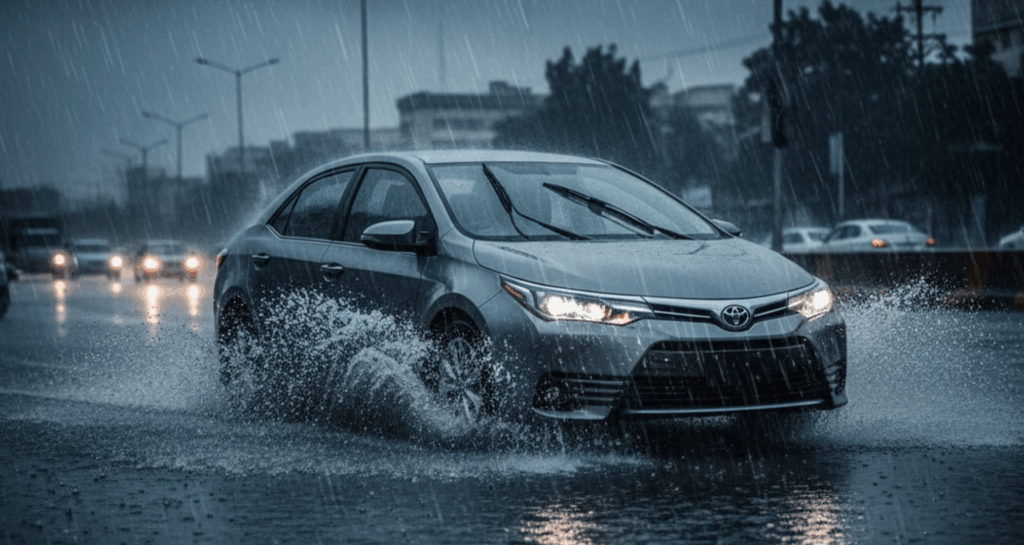
Monsoon season in Pakistan isn’t just rain falling from the sky. It’s streets turning into lakes, water getting into every part of your car it shouldn’t touch, and vehicles dying right there in the middle of busy roads. July to September, every single year, the sky opens up, and roads across Pakistan become rivers. Your car gets destroyed bit by bit. Acidic rain eats the paint. The underbody starts rusting before you even notice. Electronics fry themselves. Brakes stop working. And if you’re dumb enough or desperate enough to push through water that’s way too high, your engine’s done for good.
Here’s what most people miss. You can stop almost all of this from happening. You need to know which parts to protect, what needs to be upgraded before the storms hit, and when to accept that a flooded car isn’t worth saving. Taking care of your car in the monsoon isn’t complicated. It’s about doing the prep work ahead of time, picking products that actually work, and knowing when to walk away from a car that’s been sitting in floodwater.
This guide covers it all. We’re going through what you do before the monsoon starts, how to drive when water’s already on the road, how to check flood damage after the fact, and which coatings can handle non-stop rain. By the time you finish reading, you’ll know exactly what it takes to keep your car alive through the worst weather Pakistan throws at it.
Why Monsoon Destroys Cars in Pakistan
Pakistani monsoons don’t mess around. Other countries get drizzle that barely wets the ground. We get rain that slams down like someone’s dumping buckets from the sky. Karachi floods in minutes. Lahore’s drains can’t keep up, and water backs up everywhere. Islamabad’s roads on the hills wash away.
Small cities? Don’t even bother asking. Roads vanish under a foot of water before you can finish your chai.
Water destroys cars. It sneaks into every tiny opening, every seal, every weak spot your car has. Floor mats get soaked all the way through. Carpets suck up water like they’re designed for it. Rust shows up on metal parts in just a few days. Brake pads grab moisture and stop gripping as they should.
Then you’ve got humidity on top of everything else. Rain stops,s but the air stays heavy and wet. Paint starts breaking down faster. Leather seats grow mold. Rubber seals crack and fall apart. Metal parts corrode. One monsoon season puts a year’s worth of wear on your car, easy.
The Real Cost of Ignoring Monsoon Prep
Skip the monsoon prep, and you’ll pay for it later, guaranteed. Good wipers run you 2,000 rupees. A new windshield because you couldn’t see through the rain and smashed into something? That’s 25,000 rupees. Ceramic coating costs 15,000 to 40,000 depending on what car you drive—repainting panels after rust chews through them? You’re dropping 50,000 or more. Engine repairs after it hydrolocks? Minimum 200,000 rupees, and that’s only if the engine block didn’t crack.
Insurance won’t always bail you out on flood damage, especially when you drove straight into water that anyone could see was too deep. Even if they do cover it, you’re sitting at home without a car for weeks while they process it all. Doing the prep work costs less, takes less time, and keeps you driving instead of stuck at home.
Pre-Monsoon Prep: What to Check Before the Rain Starts
Start your monsoon prep in June, before the first big storm hits. Waiting until July means you’re already behind. Here’s what needs attention.
Check Your Drainage Points
Cars have drainage holes designed to let water out. They’re under the doors, in the rocker panels, and around the sunroof. Over time, these holes clog with dirt and leaves. When they clog, water pools inside your car instead of draining out. You end up with flooded footwells and rust starting from the inside.
Get under your car and look for these drain holes. Poke a wire through each one to clear any blockage. Do the same with the sunroof drains. Pour a little water into the sunroof tray and make sure it drains out near the wheel wells. If it doesn’t, the tubes are clogged and need cleaning.
Test Your Wipers and Replace Them If Needed
Wipers are cheap. Accidents aren’t. If your wipers are streaking, skipping, or making noise as they drag across the glass, throw them out and get new ones. Don’t try squeezing another month out of blades that are already shot. You need to see clearly when it’s pouring rain, and the guy in front of you slams on his brakes out of nowhere.
Good wiper blades in Pakistan cost between 1,500 and 3,000 rupees for a set. Bosch and Denso are reliable brands. Install them yourself or have a shop do it. Takes five minutes.
Inspect Rubber Seals Around Doors and Windows
Rubber seals keep water out. When they crack or shrink, water leaks in. Check the seals around every door and window. Run your hand along them and feel for gaps or brittleness. If you see cracks, water will find its way inside.
You can treat old seals with rubber conditioner to extend their life. But if they’re falling apart, replacement is the only fix.
Upgrade Your Floor Mats
Fabric floor mats are useless in the monsoon. They soak up water, hold it against the carpet, and turn your car into a petri dish for mold. Switch to rubber or all-weather mats.
Decent rubber floor mats cost 4,000 to 7,000 rupees for a full set. They last for years and save your carpet from rot. Buy mats that have raised edges to contain spills and water.
Test Your Battery
Wet conditions put extra strain on your battery. Starting the car, running the wipers on high, using the headlights and using the defoggers all at once drain power. If your battery is weak, it’ll die when you need it most.
Take your car to a shop and have them test the battery. If it’s more than three years old or shows low voltage, replace it.
Check Tire Tread Depth
Bald tires hydroplane. When water builds up between the tire and the road, you lose traction. Steering does nothing. Braking does nothing. You’re just sliding until you hit something or the water clears.
Tread depth should be at least 3mm. Stick a coin into the tread grooves. If you can see the top of the coin, your tires are too worn. Replace them before the monsoon hits. Good tires cost 6,000 to 12,000 each, but they keep you from sliding into traffic.
Ceramic Coating vs Graphene Coating for Monsoon Protection
Paint protection matters when monsoon hits. Acidic rain, road filth, and constant moisture attack your clear coat.
Once the clear coat gives way, the paint beneath it starts to oxidize, and rust takes over. Waxing does something, but it washes away after a couple of heavy rains. Ceramic and graphene coatings stick around way longer.
How Ceramic Coating Protects Your Car
Ceramic coating bonds with your paint at the molecular level. It puts a hard layer on top that repels water.
Rain hits it, forms beads, and rolls right off instead of sitting there. Dirt and grime can’t grab hold as easily. The coating also blocks UV rays and resists the chemical damage caused by acidic rain.
A solid ceramic coating lasts 2 to 5 years, depending on which brand you pick and how well you take care of it—in Pakistan, getting it applied by a pro costs 15,000 to 40,000 rupees, depending on your car’s size and the product they use. The expensive stuff like Gtechniq, Ceramic Pro, and IGL Coatings sits at the higher end of the price range. range
When the monsoon’s going, ceramic coating keeps water from pooling on your paint. It makes washing way easier too because dirt slides off. You’re not scrubbing hard, so you’re not scratching up the paint either.
Graphene Coating: The Next Step Up
Graphene coating is newer. It uses graphene particles mixed into the formula. Graphene conducts heat, so the coating dissipates heat faster than a ceramic coating. It also repels water even better. Water sheets off so fast you barely need wipers at highway speed.
Graphene coatings are more flexible than ceramic coatings, so they resist cracking during temperature changes. They also tend to be slightly thicker, which adds a bit more scratch resistance. In Pakistan, graphene coating costs between 25,000 and 60,000 rupees, depending on the product and the detailer.
Which One Should You Choose for Monsoon?
Both work.
Ceramic is proven and widely available. Graphene is slightly better but costs more. If your budget allows, graphene gives you an edge. If not, ceramic still delivers excellent monsoon protection.
The real decision is whether to get any coating at all. Wax washes off. Paint sealant lasts a few months—ceramic and graphene last years. For monsoon protection, coatings are the smart move.
They save you from repainting panels down the road.
Driving Through Floodwater Without Destroying Your Engine
Know Your Car’s Wading Depth
Every car has a maximum wading depth. It’s the highest water level you can drive through without sucking water into the engine.
For most sedans, that’s about 6 to 8 inches. For SUVs and crossovers, it’s 12 to 18 inches. For proper off-road vehicles with raised air intakes, it’s higher.
Your air intake sits low near the front bumper. If water reaches the intake, the engine sucks it in. Water doesn’t compress like air. The piston tries to compress it anyway. The connecting rod bends or snaps. The engine seizes. This is called hydrolocking, and it totals your engine.
Before driving through water, look at the cars ahead. If water is above their wheel centers, it’s too deep for most sedans. If you can’t see the curb or road markings, don’t risk it. Turn around.
How to Drive Through Standing Water
If you have to cross, go slow. Speed creates a bow wave that pushes water up and into your engine bay.
Crawl through in first gear at 5 to 10 km/h. Keep the engine revs steady, so exhaust pressure prevents water from entering the tailpipe.
Don’t stop in the middle. If you stall, water can rush into the intake. If the car behind you creates a wake, it can swamp your engine. Keep moving until you’re through.
Once you’re out, dry your brakes. Drive slowly and tap the brake pedal a few times. Friction generates heat and evaporates the water. If you don’t, your brakes will be spongy and weak for the next few stops.
What to Do If Your Car Stalls in Water
Car dies while you’re crossing floodwater? Don’t touch that ignition. Don’t even think about restarting it. Turning the key with your cylinders full of water will completely wreck the engine. What you do instead is throw it in neutral, get out, and push the car to somewhere higher. If the water’s too deep or moving too fast, leave the car there and get yourself out. You’re worth more than any car.
After the water goes down, get the car towed to a workshop. Still don’t start it. The mechanic has to pull the spark plugs or injectors first, then crank the engine to get any water out of the cylinders. They’ll check everything for damage after that. Maybe you get lucky, and the engine’s okay. Maybe you don’t, and you’re stuck paying for serious repairs.
What to Do After Your Car Gets Flooded
Flood damage ranges from minor to catastrophic depending on how deep the water was and how long the car sat in it. Here’s how to assess the damage and decide what’s fixable.
Check the Water Line
Look inside the car and find the highest point the water reached. Check the seats, door panels, and dashboard for water marks. The higher the water went, the more damage you’re dealing with.
If water only reached the floor, you might get away with drying the interior, cleaning the carpets, and replacing floor mats. If water reached the seats, the foam inside has soaked up the water and will mold unless you pull the seats and dry them properly. If water reached the dashboard, your electrical system is compromised.
Drain and Dry the Interior
Pull out the floor mats and carpets. Remove the seats if water soaked through. Let everything dry completely. This takes days, not hours. Park the car in the sun with all doors and windows open. Use fans to circulate air. If you skip this step, mold grows, and the smell never goes away.
Check the trunk too. Water enters from the rear and pools in the spare tire well. Lift the spare and check for standing water. Drain it and dry the area.
Inspect the Engine Bay
Open the hood and look for water. Check the air filter. If it’s wet, water entered the intake. Do not start the engine. Have a mechanic inspect it. Check the oil dipstick; if the oil looks milky or contains bubbles, water has mixed into it. The engine needs to be drained and flushed before you run it.
Look at the fuse box. If water got in, corrosion will cause electrical gremlins. Fuses might need replacing. Relays might be damaged. Wiring might short.
Test Electrical Systems
Once everything is dry, reconnect the battery and test the lights, wipers, radio, windows, and locks. If something doesn’t work, there’s water damage in the wiring or control modules. Electrical repairs are expensive and time-consuming. Modules can cost between 20,000 and 100,000 rupees each, depending on the car.
Decide If the Car Is Worth Fixing
If water reached the dashboard and multiple electrical systems are dead, the repair bill can exceed the car’s value. Insurance might total it. If water only reached the floor and everything works after drying, you’re fine.
Flood-damaged cars often develop problems months later. Corrosion spreads. Sensors fail—modules glitch. If you’re buying a used car, check for flood damage. Look for mud in crevices, water stains under carpets, and corrosion on metal parts under the dash.
Monsoon Maintenance: What to Do During the Season
Monsoon car care isn’t a one-time thing. You can’t just prep before the first rain and forget about it. You’ve got to keep at it the whole season if you want your car running right.
Wash Your Car Regularly
Rain doesn’t wash your car. It just dumps dirt, pollution, and acidic crud all over it. Wash your car every week when the monsoon’s going. Use actual car shampoo, not the dish soap from your kitchen.
Rinse everything off properly and dry it with a microfiber towel. Got ceramic or graphene coating? Then washing matters even more because that’s what keeps the water-repelling action working.
Check Under the Car for Mud and Debris
Drive through floodwater, and mud jams itself up into the undercarriage. That mud holds moisture right against the metal,l and rust starts spreading fast. Blast the underbody with a hose to knock it all loose. If the mud’s really stuck on there, take it to a car wash that’s got a pressure washer.
Lubricate Moving Parts
Water strips away the grease and oil that keeps hinges, latches, and cables moving smoothly. Hit your door hinges, hood hinges, and trunk latches with WD-40 or something similar.
Do the throttle cable and handbrake cable too. Skipping this means they’ll lock you out later.
Monitor Your Brake Performance
Wet brakes don’t work as well. After you’ve gone through water, find a safe spot and test your brakes. Feel spongy?
Pump them a few times to dry out the pads and rotors. Still not right? Get a mechanic to look because water might’ve gotten into the brake fluid.
Keep the Interior Dry
Turn on the AC to remove moisture from the cabin. AC sucks humidity right out of the air and stops mold from growing. No AC in your car? Crack the windows a bit when you park so moisture can get out. Toss a small pack of silica gel or a moisture absorber in there too.
Products That Actually Help During Monsoon
Rain Repellent for Windshields
Products like Rain-X coat your windshield with a hydrophobic layer. Water beads up and flies off at speed. You use wipers less, which means better visibility and longer wiper life. A bottle costs around 1,500 rupees and lasts several months. Apply it every few weeks.
Anti-Fog Spray for Windows
Humidity causes windows to fog up from the inside. Anti-fog spray prevents this. Spray it on the inside of your windshield and windows, wipe it off, and fogging stops. Costs around 800 rupees and works well.
Rust Prevention Spray
Spray rust inhibitor on metal parts under the car. It creates a protective film that blocks moisture. Focus on the exhaust system, suspension components, and any exposed metal. A can costs 1,200 to 2,000 rupees and is worth it for older cars.
Door Seal Lubricant
Rubber conditioner keeps door seals flexible and prevents water leaks. Apply it to all door and window seals before monsoon starts. Costs around 600 rupees and extends seal life.
FAQs: Monsoon Car Care
Can I drive my car immediately after it’s been submerged in floodwater?
No. If your car stalls in floodwater or gets submerged, do not try to start it. Water may have entered the engine through the air intake. Starting the engine will cause hydrolocking, which destroys the engine. Have the car towed to a mechanic who can inspect it, remove the spark plugs, and expel any water from the cylinders before attempting to start it.
How often should I wash my car during monsoon season?
Wash your car once a week through monsoon season. Rain isn’t clean water. It drags down dirt, pollution, and acids that land on your paint and start wrecking it if you don’t clean them off. Washing regularly pulls all that junk away and keeps your clear coat from going bad. And if you’ve already put ceramic or graphene coating on, washing every week keeps that water-beading thing alive so rain slides right off instead of sitting there.
Is ceramic coating worth the cost for monsoon protection in Pakistan?
Yes. A ceramic coating costs 15,000 to 40,000 rupees and lasts 2 to 5 years. It lays down a layer that pushes water right off, keeps dirt from sticking and blocks the damage acidic rain causes to your paint. Down the line, you’re actually saving cash because you’re not waxing every other month, and you won’t be dropping big money on repainting when your clear coat wears out. A graphene coating does an even better job, but you’re looking at 25,000 to 60,000 rupees for that.
When to Park Your Car and Wait It Out
Sometimes the smart move is not to drive. If streets are flooded, visibility is zero, or forecasts predict severe storms, park your car and stay home. No trip is worth totaling your engine or getting stranded in floodwater.
Park on high ground if possible. Avoid low-lying areas and underpasses. If you live in a flood-prone area, consider parking your car at a friend’s place on higher ground during peak monsoon weeks.