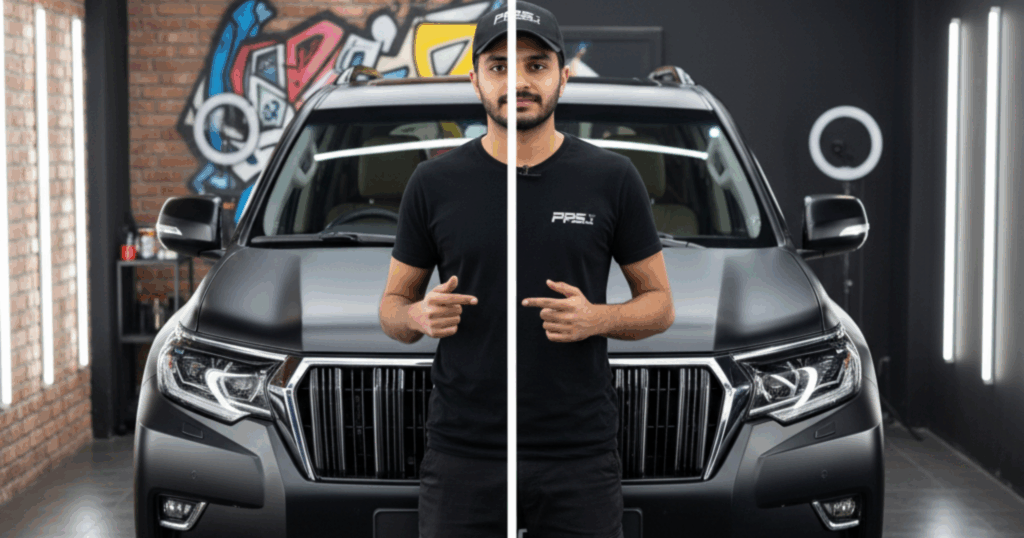
The chrome trend is dying, and honestly, it’s about time. Drive through Karachi’s Clifton or Lahore’s DHA, and you’ll notice a clear shift—modern car enthusiasts are ditching shiny chrome accents for sleek matte or gloss-black finishes. This transformation, known as “chrome delete,” has become one of the most requested modifications at Pakistani workshops, and for good reason. Chrome can look dated, shows fingerprints within seconds of washing, and screams “2010s aesthetic” in the worst way possible. But here’s where Pakistani car owners get stuck: What’s the actual price of a chrome delete in Pakistan, and, more importantly, which method should you choose? Walk into any modification shop, and you’ll hear two main options—PPS blackout coating and traditional vinyl wrapping. Both promise to eliminate that chrome, but they differ dramatically in application, durability, cost, and final appearance.
Whether you’re planning to black out the chrome on your new Civic, transform your Corolla’s dated chrome trim, or give your Fortuner a more aggressive appearance, this guide answers every question you have about chrome-delete options available in Pakistan.
Understanding Chrome Delete: Why Pakistani Car Owners Are Making the Switch
Before diving into the PPS versus wrap debate, let’s understand why chrome delete has become such a massive trend in Pakistan’s automotive scene.
Modern car design is moving away from chrome. Look at any premium vehicle from the past three years—Mercedes, BMW, Audi—they’re offering “Black Edition” or “Dark Theme” packages as standard or premium options. Car manufacturers understand that contemporary styling favors subtle, sophisticated finishes over flashy chrome accents. Pakistani buyers, increasingly exposed to international automotive trends through social media and YouTube, want their vehicles to reflect this modern aesthetic.
Chrome also has practical disadvantages in our climate. Pakistan’s intense summer heat makes chrome uncomfortably hot to the touch. Try grabbing a chrome door handle in Karachi’s June humidity or Multan’s 45-degree heat—it’s genuinely painful. Blackened trim stays significantly cooler because it doesn’t reflect and concentrate heat the same way chrome does.
What is PPS Blackout Coating?
PPS blackout coating represents the newer approach to chrome deletion in Pakistan. PPS stands for “Paint Protection System,” though the coating itself is essentially a specialized polymer-based liquid coating applied directly onto chrome surfaces.
PPS coatings come in different finishes—matte, satin, and gloss—allowing customization based on preference. The coating thickness is minimal, typically measured in microns, meaning it doesn’t add noticeable bulk to the trim pieces. The finish, when properly applied, looks remarkably similar to factory-painted black trim.
The chemistry behind PPS coatings is interesting. They’re formulated to withstand UV exposure, temperature fluctuations, and chemical exposure from car care products. Quality PPS products include UV stabilizers that prevent the dreaded “chalking” or color fading that plagued earlier coating products.
In Pakistan’s market, PPS blackout became popular around 2018-2019, initially in Lahore’s modification scene before spreading to other cities. Workshop owners adopted it because it required less specialized skill than a perfect vinyl wrap application, offered better margins than wrap materials, and could be marketed as a “permanent” solution compared to wraps.
However, not all PPS coatings are equal. The Pakistani market features everything from genuine imported products to locally manufactured alternatives of varying quality. This variance in product quality creates wildly different results and durability, which we’ll explore in detail.
Understanding Traditional Vinyl Wrapping for Chrome Delete
Vinyl wrapping, the more established chrome-delete method, involves applying a specialized adhesive-backed vinyl film to chrome trim pieces. The vinyl comes in a massive variety—colors, finishes (matte, gloss, satin, brushed, carbon fiber texture), and quality grades from budget to premium.
Professional vinyl wrapping is genuinely skilled work. The process involves precise measurement, careful vinyl cutting, heat application to make the vinyl pliable, stretching and conforming the material around curves and edges, and finally, trimming excess material for clean edges. Quality wrap jobs are nearly indistinguishable from factory finishes.
The vinyl itself has evolved significantly. Modern automotive vinyl from manufacturers such as 3M, Avery Dennison, and KPMF includes advanced adhesives that bond strongly yet remove cleanly, air-release channels that prevent bubbles during application, and protective clear coats for durability.
Vinyl wrapping’s versatility is its major advantage. Don’t like the finish? Remove and replace with different vinyl. Want carbon fiber texture instead of plain black? Simple material swap. Wrapping allows experimentation without permanent commitment.
In Pakistan, vinyl wrapping for chrome delete became popular earlier than PPS, probably around 2015-2016. Initially limited to high-end workshops in major cities, the wrap application has since become widely available—though quality varies dramatically between installers.
The wrap industry in Pakistan faces challenges. Counterfeit vinyl floods the market, with fake “3M” or “Avery” products sold at a fraction of genuine prices. These inferior materials fade quickly, peel easily, and damage the underlying chrome during removal. This prevalence of low-quality vinyl has unfairly damaged wrapping’s reputation among Pakistani buyers who’ve had bad experiences with cheap materials.
The Real Chrome Delete Price in Pakistan: Breaking Down Costs
Let’s address the most searched question: what is Chrome delete price in Pakistan, and how do PPS and wrapping compare financially?
PPS Blackout Coating Costs:
Premium PPS products and experienced applicators charge the higher end. Budget PPS applications using local products cost toward the lower end. The price increases for larger vehicles—expect PKR 25,000 to PKR 50,000 for SUVs like the Toyota Fortuner or Land Cruiser due to more extensive chrome trim.
Additional costs include possible re-application. PPS isn’t truly permanent—it degrades over time. Quality applications last 2-4 years, while budget products might show wear within 12-18 months.
Traditional Vinyl Wrap Costs:
Chrome delete wrapping costs vary more dramatically based on material quality and installer expertise. Using genuine premium vinyl (3M or Avery Dennison), professional installation for a sedan ranges from PKR 20,000 to PKR 45,000 for complete chrome coverage.
Budget vinyl applications using local or lower-grade materials cost PKR 12,000 to PKR 25,000. However, these budget jobs rarely last long in Pakistani conditions—expect fading, peeling, and adhesive failure within 6-12 months.
SUV chrome delete wrapping costs PKR 30,000 to PKR 65,000, depending on premium materials and expert installation. The higher cost reflects both more material usage and the additional labor for complex curves and larger surface areas.
Vinyl’s long-term cost consideration involves replacement. Quality vinyl lasts 3-5 years with proper care, but removal and re-wrapping incur similar costs to the initial job. However, vinyl allows you to change styles—perhaps trying carbon fiber texture or different colors—whereas PPS re-coating typically means repeating the same black finish.
Hidden Costs and Considerations:
Both methods may require additional expenses. If your chrome has deep scratches, corrosion, or pitting, surface preparation becomes more complex and costly. Some workshops charge extra for this prep work—PKR 3,000 to PKR 8,000, depending on the condition.
For wrapped trim, ongoing care products matter. Quality vinyl benefits from specialized cleaners and protectants that prevent premature degradation. Budget PKR 2,000-3,000 annually for proper maintenance products.
PPS coatings also benefit from protection. Applying quality wax or sealant over cured PPS extends longevity. Again, expect PKR 2,000-4,000 annually for premium protection products.
Durability in Pakistani Climate: The Reality Check
Pakistan’s climate is brutal for automotive modifications.
PPS Blackout Durability:
Quality PPS coatings hold up reasonably well in Pakistani conditions when properly applied—the polymer bonds directly to chrome, creating mechanical adhesion that resists peeling better than some adhesive-backed materials.
UV resistance is crucial. Premium PPS products include stabilizers that prevent the coating from degrading in Pakistan’s intense sunlight. In cities like Lahore, Karachi, or Multan, where vehicles are exposed to daily sunlight, quality PPS maintains its appearance for 2-3 years before noticeable fading or chalking occurs.
Heat resistance is generally good. PPS coatings withstand the temperature extremes of Pakistani summers without softening or degrading. However, thermal cycling—the daily expansion and contraction as temperatures swing from night cold to afternoon heat—eventually causes micro-cracking in lower-quality PPS products.
Chemical resistance varies by product quality. Premium PPS resists damage from car wash chemicals, detailing products, and environmental contaminants. Budget PPS can be sensitive to certain cleaners, causing discoloration or surface damage.
Physical durability is PPS’s weakness. The coating is thin and somewhat brittle. Rock chips, scratches from improper washing, and impacts easily damage the finish. Unlike vinyl, which can stretch and absorb minor impacts, PPS chips away, exposing the chrome underneath.
Vinyl Wrap Durability:
UV resistance in premium vinyl is exceptional. Advanced polymer formulations and protective clear coats maintain color for 4-5 years, even under the Pakistani sun. I’ve seen quality wrap jobs in Karachi’s coastal humidity looking nearly perfect after three years.
Heat resistance is generally excellent. Premium vinyl is designed to withstand temperatures well above what Pakistani summers bring. The adhesive maintains bond strength through temperature cycles without lifting or bubbling—assuming proper initial installation.
Chemical resistance in quality vinyl is very good. Automotive cleaners, waxes, and sealants don’t damage properly specified vinyl. However, aggressive solvents and some petroleum-based products can affect adhesives or other materials.
Water resistance is excellent throughout the vinyl’s life. The material is inherently waterproof, and quality installation with proper edge sealing prevents water intrusion. This matters enormously during Pakistan’s monsoon season, when vehicles are exposed to prolonged water.
Application Process: What Actually Happens During Chrome Delete
Understanding the application process helps you evaluate whether your chosen workshop is doing the work properly or cutting corners that could compromise longevity.
PPS Blackout Application Process:
Proper PPS application begins with thorough surface preparation. The chrome must be completely clean—free of wax, polish residue, oils, and contaminants. Professional installers use specialized degreasers, followed by isopropyl alcohol wipes to ensure spotless surfaces.
Light sanding or scuffing comes next for quality work. This creates a mechanical grip for the coating to bond. Some installers skip this step to save time, but it significantly improves adhesion. Look for workshops that mention surface abrading as part of their process.
Masking protects the surrounding areas. Quality work involves careful masking of adjacent painted surfaces, rubber seals, and glass to prevent overspray. Lazy masking is visible in finished work—you’ll see coating on areas where it shouldn’t be.
The coating application itself requires a proper environment—temperature and humidity matter. Applying PPS in open-air workshops during summer heat or monsoon humidity compromises results. Quality workshops have climate-controlled or at least enclosed application areas.
Multiple thin coats produce better results than single thick applications. Each coat must cure properly before the next coat is applied. This process takes time—rushing it compromises adhesion and finish quality. Beware of workshops promising same-day completion—proper PPS application requires at least 24-48 hours.
Curing time is crucial. Freshly applied PPS needs time to harden and bond fully. Quality applicators recommend 48-72 hours before washing or exposing the vehicle to weather. Rushing this curing period invites problems.
Vinyl Wrap Application Process:
Vinyl wrapping requires even more skill and preparation than PPS application. The process begins with the removal of trim when possible. Wrapping trim pieces removed from the vehicle allows complete coverage, proper edge wrapping, and cleaner results. In-place wrapping is faster but produces inferior results.
Surface preparation involves thorough cleaning with specialized solutions that remove all contaminants without leaving residue. The chrome must be absolutely spotless—even tiny dust particles create bubbles or imperfections under the vinyl.
Vinyl cutting and templating come next. Skilled installers create templates or carefully measure to minimize waste and ensure proper coverage. Cutting on the vehicle risks scratching paint and creates less precise edges than pre-cutting from templates.
Heat application is where skill becomes obvious. The installer uses heat guns to make vinyl, allowing it to conform to curves, channels, and complex shapes. Too little heat and the vinyl won’t stretch properly. Too much heat damages the material or causes distortion.
Stretching and applying require experience and feel. The installer must stretch vinyl evenly—not too much (which stresses the material and reduces longevity) or too little (causing wrinkles and imperfect adhesion). This tactile skill separates quality installers from amateurs.
Edge work and tucking determine longevity. Properly wrapped trim has vinyl tucked around edges and into channels where possible, preventing exposed edges that lift over time. Exposed cut edges, visible on poor wrap jobs, begin peeling almost immediately.
Post-heating and edge sealing complete quality work. A final heat application activates the adhesive for maximum bond strength. Some installers apply edge sealant products that further prevent lifting. These final steps separate lasting wrap jobs from failures.
The entire process for quality vinyl wrapping takes 1-3 days, depending on vehicle size and complexity. Beware of shops that promise a same-day turnaround—they’re cutting corners somewhere in this process.
Appearance and Finish Quality: The Visual Comparison
The finished appearance of Chrome delete in Pakistan matters enormously—it’s literally the entire point of the modification.
PPS Blackout Appearance:
Well-applied PPS blackout coating produces a finish quality remarkably similar to factory-painted black trim. The thin coating doesn’t add noticeable thickness, maintaining original trim proportions and lines.
Color uniformity is good with quality PPS products. The finish is consistent across all coated surfaces, without the color variations that sometimes occur with wrapped trim using vinyl from different production batches.
The available finishes—matte, satin, and gloss—each create different aesthetics. Matte black produces an aggressive, modern appearance.
Texture consistency is where PPS sometimes struggles. Application skill has a dramatic effect on the final texture. Perfect application produces a smooth, uniform texture. Poor application shows texture variations, runs, or an orange-peel effect that screams “budget modification.”
Edge definition is cleaner with PPS than with poor vinyl work. Since it’s a coating rather than an applied material, there’s no film edge to see or feel. Transitions between coated chrome and adjacent surfaces are seamless when properly masked.
Long-term appearance maintenance is challenging. As PPS ages, the surface texture changes. It becomes slightly rougher, potentially shows chalking, and may develop micro-cracks.
Vinyl Wrap Appearance:
Premium vinyl, expertly applied, can be virtually indistinguishable from factory-finished trim. The material quality and installation skill determine whether the result looks factory-perfect or obviously modified.
Color and finish variety is vinyl’s biggest advantage. Beyond basic black, you can choose a brushed-metal appearance, carbon-fiber texture, matte colors, gloss colors, or even chrome-delete-to-chrome using colored chrome vinyl. This versatility allows for customization not possible with PPS.
Texture consistency in quality vinyl is excellent. Premium materials have a uniform texture throughout—matte stays matte, gloss maintains a consistent shine, and textured finishes like carbon fiber look authentic.
Edge visibility is the telltale sign of wrap quality. Perfectly wrapped trim shows no vinyl edges—everything is tucked, hidden, or so precisely cut that edges aren’t noticeable. Poor wrap jobs show visible film edges, lifted corners, and cut marks. Examine edge work closely when evaluating wrap jobs.
Conformity to complex shapes reveals installer skill. Chrome trim often has compound curves, channels, and three-dimensional shapes. Quality wrapping conforms perfectly, with no wrinkles, bridging, or stretched areas. Budget work shows all these defects.
Long-term appearance is interesting with vinyl. Quality material maintains its appearance for years, then, rather suddenly, begins to fail as adhesive weakens or the material deteriorates. This differs from PPS’s gradual degradation. You’ll have years of perfect appearance followed by a relatively quick decline.
Maintenance Requirements: Keeping Your Chrome Delete Looking Fresh
Both PPS and vinyl require proper maintenance to maximize longevity and appearance.
PPS Coating Maintenance:
PPS coatings require regular cleaning with specific products. Harsh detergents can damage the coating surface. Use pH-neutral car wash products designed for painted surfaces. Quality car wash shampoos from brands like Meguiar’s or Chemical Guys work well.
Avoid automatic car washes with harsh brushes. The rotating brushes can scratch and prematurely wear PPS coatings. Hand washing or touchless automatic washes are safer choices.
Apply protection regularly. Quality spray waxes or ceramic spray sealants provide additional UV protection and make cleaning easier. Apply every 2-3 months for best results.
Don’t use solvent-based products directly on PPS. Strong solvents, bug and tar removers, and petroleum distillates can damage the coating. If using such products on painted surfaces, avoid contact with PPS-coated trim.
Vinyl Wrap Maintenance:
Vinyl wraps tolerate more aggressive cleaning than PPS but still benefit from gentle care. Use quality car wash products, but avoid brushes with stiff bristles that might catch vinyl edges.
Hand washing is ideal, but quality vinyl can tolerate touchless automatic washes. Avoid automatic washes with spinning brushes—they can catch vinyl edges and cause lifting.
Don’t use pressure washers directly on vinyl edges. High-pressure water can force its way under the vinyl, causing lifting and adhesive failure. Keep pressure-washer tips away from edges, or, better yet, use a regular hose for rinsing.
Protect vinyl with quality spray sealants or wrap-specific protectants. These products provide UV protection and make vinyl easier to clean. Apply every 4-6 weeks in Pakistan’s conditions.
Heat can restore vinyl’s appearance. Minor surface scratches on quality vinyl can be removed using a heat gun or a hair dryer. The self-healing properties of premium vinyl allow the material to flow back together, eliminating minor damage.
The Environmental and Resale Value Considerations
Two often-overlooked factors in the chrome delete decision are environmental impact and effects on vehicle resale value.
Environmental Considerations:
PPS coatings involve chemical compounds and solvents that have environmental impacts during manufacturing and application. The coating application releases volatile organic compounds (VOCs) into the atmosphere. However, the relatively small quantity used per vehicle makes the individual impact minimal.
PPS longevity can be viewed as environmentally positive—a single application lasting 3-4 years means less frequent reapplication and less material consumption than shorter-lasting alternatives.
Vinyl wrap production also has an environmental footprint, primarily from petroleum-based polymers. However, modern vinyl manufacturing has improved efficiency and reduced harmful outputs. Quality vinyl’s 4-5 year lifespan means relatively infrequent replacement.
Vinyl’s removability without damaging the underlying chrome could be considered environmentally positive—it doesn’t require chemical stripping or surface preparation that PPS removal needs.
Resale Value Impact:
Chrome’s effect on resale value varies based on execution quality and buyer preferences. Quality chrome delete—either PPS or vinyl—can actually increase appeal to younger buyers who prefer modern aesthetics. However, it might reduce appeal to conservative buyers who prefer original chrome.
Professionally executed chrome delete typically doesn’t significantly harm resale value. Some buyers specifically seek vehicles with quality modifications already completed. The key is quality—amateur work definitely hurts resale value.
Vinyl wrap’s removability is advantageous for resale. If you’re uncertain whether chrome delete will appeal to future buyers, vinyl lets you revert to the original chrome before selling. This flexibility protects resale value better than irreversible modifications.
PPS coating is harder to reverse cleanly. Removal requires chemical strippers and refinishing work. For resale purposes, you’re committed to selling with the blackout finish. This isn’t necessarily bad, but it does limit your options.
Document your Chrome delete work. Keep receipts showing the use of quality materials and professional installation. When selling, demonstrating proper execution with quality materials adds value and buyer confidence.
FAQs: Chrome Delete Price in Pakistan
Q: How long does Chrome last in Pakistan’s climate, and what factors affect longevity most significantly?
Chrome’s longevity in Pakistan depends primarily on three factors: application quality, material grade, and ongoing maintenance. Quality PPS blackout coating typically lasts 2-4 years before showing noticeable degradation, such as fading or chalking. Premium vinyl wraps last 4-5 years with proper care. However, budget materials and poor application dramatically reduce these timeframes—low-quality PPS might show problems within 12-18 months, while cheap vinyl can fail in 6-12 months. Pakistan’s intense UV exposure is the biggest environmental challenge affecting longevity, particularly in cities like Lahore, Karachi, and Multan, where vehicles are exposed to the sun daily.
Q: Can I remove chrome later if I change my mind, and what condition will the original chrome be in?
Removability differs dramatically between PPS and vinyl, making this a crucial consideration if you’re uncertain about permanent commitment to black trim. When professionally applied and properly removed, vinyl wrap leaves the underlying chrome in excellent original condition. The removal process involves heating the vinyl to soften the adhesive, then carefully peeling it away at the proper angles to avoid adhesive transfer. Professional removal typically costs PKR 5,000-12,000, depending on vehicle size. The chrome underneath appears essentially the same as before wrapping, though it will need thorough cleaning to remove any minor adhesive residue. Quality vinyl adhesives are designed to leave no permanent marks or damage.
Q: What’s the chrome delete price in Pakistan for different vehicle types, and what hidden costs should I budget for?
The price of chrome delete in Pakistan varies significantly by vehicle type, chosen method, material quality, and workshop location. For compact sedans like the Honda City or Toyota Yaris, expect the PPS blackout coating to cost PKR 15,000-25,000 for quality work covering all chrome trim, including window moldings, door handle surrounds, grille accents, and mirror caps. Budget PPS applications might quote PKR 10,000-12,000, but often deliver substandard results that are not worth the savings. For the same compact sedans, premium vinyl wrap chrome delete costs PKR 20,000-35,000 using genuine materials.