Your car’s interior takes a proper beating every single day. Dust from Lahore’s unpaved streets gets into every bit of the fabric. In Karachi’s heat, those leather seats feel like sitting on a hot plate. One chai spill and you’ve got a stain that’s never coming out. Kids walk in after playing outside with mud all over their shoes. Give it a few months, and your seats will look absolutely wrecked, which will tank your resale value badly.
Most people figure seat covers are something they’ll sort out later. That’s a mistake. Decent seat covers protect your car right from the start. They block sun damage, keep water out, stop stains from setting in, and take all the daily punishment. When you want to sell, you pull off the covers and the original seats underneath look practically unused. Buyers pay serious money for a car that’s been maintained well.
This guide covers everything you need to know about seat covers as a Pakistani driver. By the end, you’ll know exactly which covers make sense for your car and your budget.
Why Car Seat Covers Actually Matter Here
Pakistani driving conditions absolutely wreck car interiors. Summer temperatures inside a parked car easily reach 60 degrees. That level of heat destroys leather, bleaches fabric, and makes seats too scorching to even touch.
Then you’ve got the dust issue. Even with your windows shut tight, that fine dust sneaks in everywhere. It burrows into the fabric and leather. If you’re on kaccha roads or going through construction areas, forget it. The dust embeds itself so deep that vacuuming barely touches the surface. Everything feels grimy no matter how hard you clean.
Moisture is another headache, especially in Karachi during the monsoon or in any coastal city, really. Humidity gets trapped in the foam padding, creating the perfect setup for mold. That musty smell becomes impossible to get rid of once it starts. Spilled drinks or wet clothes from the rain soak right through to the padding. Even after it dries on the surface, moisture remains trapped inside, causing damage. Water-resistant seat covers stop liquids from reaching your real upholstery. Something spills? Just wipe the surface, and you’re done.
Style customization gives you control over your car’s personality. Maybe you bought a Corolla in boring beige because that’s all they had in stock. Black leather-look seat covers instantly change the whole vibe. Or maybe your used Civic came with worn-out grey cloth seats.
This flexibility matters because your car should look the way you want it to, not just the way Toyota or Honda decided. Seat covers cost way less than custom reupholstery and give you similar results. You can try different styles without committing permanently.
Different Seat Cover Materials Explained
Here are some major kinds of seat covers available for Pakistani car owners:
Basic polyester fabric covers are the budget option. You’ll see them for Rs 2,000 to Rs 6,000 for a full set. Basic polyester breathes okay and comes in lots of colors. But thin polyester wears out fast with daily use. Seams come apart. Colors fade from the sun. Worst of all, cheap polyester feels rough and traps heat like crazy. These only make sense for older cars where you just need basic protection and don’t care about comfort or longevity.
Leather-look covers (PU/PVC) give you that upscale appearance without paying real-leather prices. Quality jumps all over the place in this category; cheap PU leather cracks and peels within months, especially under the sun. The surface turns sticky in heat and goes stiff in cold weather.
Anything below Rs 8,000 typically lets you down.
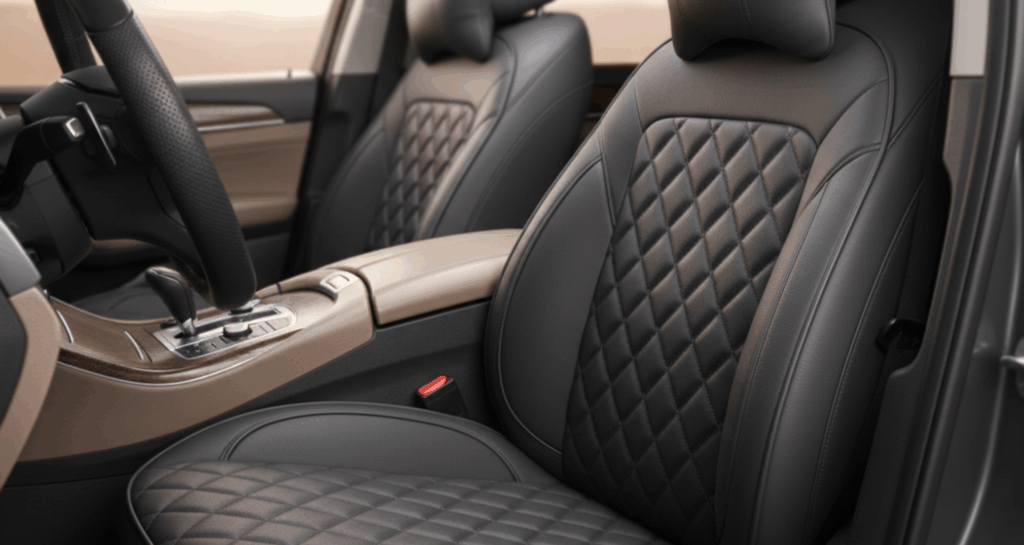
Premium synthetic leather from reputable brands uses higher-quality materials that resist cracking and remain flexible across a range of temperatures. The texture actually looks like genuine leather.
These covers wipe clean easily and handle moisture well. Proper synthetic leather seat covers cost Rs 15,000 to Rs 25,000 but last for years. They work really well in Pakistan’s climate because they don’t retain humidity as fabric does.
Real leather seat covers are the top-tier choice. Genuine leather breathes naturally, ages like fine wine, and feels absolutely luxurious. But leather needs regular conditioning; otherwise it dries out and cracks in Pakistan’s killer heat.
Plus it’s genuinely pricey, with proper sets costing Rs 30,000 to Rs 50,000. Unless you’re willing to look after leather properly and you’re driving a luxury vehicle where that kind of spending makes sense, synthetic alternatives give you far better value for money.
Neoprene covers use the same material as wetsuits. They’re completely waterproof, ridiculously tough, and shrug off stains like nothing. Neoprene works perfectly for families with kids, people with pets, or anyone who deals with moisture a lot. The material has good grip so that you won’t slide around in your seat. The downsides? Not many color choices and the price sits higher, usually Rs 18,000 to Rs 28,000. Still worth every rupee if you need serious protection.
Mesh and cooling covers use open-weave materials designed for hot weather. Air flows freely through them, preventing that suffocating feeling in summer. Some have gel inserts or ventilation channels for extra cooling.
These sacrifice some protection and durability for superior comfort in heat.
Prices range from Rs 8,000 to Rs 15,000. They’re excellent for Pakistan’s April-to-September nightmare, but you might want warmer covers for winter.
Memory foam and ergonomic covers prioritize support over the outer material. The top layer might be polyester, synthetic leather, or mesh. What really matters is the thick foam padding underneath.
These cost Rs 12,000 to Rs 20,000 but completely change comfort levels for anyone with back pain or who drives for hours.
If comfort is your top priority, this style delivers the biggest improvement.
Getting the Right Fit for Your Car
Seat covers basically come in two types: universal fit and custom fit. Knowing the difference saves you hassle and wasted cash.
Universal fit covers work across different car models. They use elastic edges, straps, and hooks to adjust to various seat shapes. Decent universal covers fit reasonably well on most standard sedan and hatchback seats.
They’re easy to find and cost less than custom ones. Installation takes around 15 to 20 minutes per seat, no tools needed. The thing is, universal covers never fit as snugly as custom ones do. You’ll notice some bunching or loose areas, especially on seats with unusual shapes.
Armrests might not align just right. If your car’s got seat controls or airbags in odd positions, universal covers could interfere. For standard sedans like Corolla, City, or Civic with normal seats, good universal covers do the job and save you money.
Custom fit covers are built specifically for your exact car make, model, and year. They follow every curve and feature of your seats. Headrests match up perfectly. Cutouts align exactly with armrests, controls, and airbags. The result looks like factory upholstery rather than obvious add-ons. Custom fit runs more expensive, usually Rs 5,000 to Rs 10,000 extra per set, but the results are worth it for newer or better cars.
When you’re ordering custom covers, getting it right matters a lot. You need your car’s exact year because seat designs actually change between model years. A 2022 Civic has different seats compared to a 2020 Civic. Power seat controls add complications that manual seats don’t have. If your seats have side airbags, the covers need the right cutouts to prevent deployment from being blocked. AutoStore.pk shows compatibility clearly for every product, listing exactly which cars and years each cover fits.
How hard installation is depends on the cover style. Basic slip-on covers with elastic edges go on quickest. You pull them over the seat and tuck in whatever’s left. These suit simple, flat seats best. Covers with separate headrest bits mean you’ll have to remove and put back the headrests, adding a couple of minutes per seat. Multi-piece designs with zippers or velcro take longer but end up looking the neatest.
Some covers include installation instructions that keep things simple. If this is your first time, plan on 30 to 45 minutes while you work it out. Your second go will take half that time. Getting someone to help makes it easier, especially for bottom cushion covers where you’ve got to tuck material in tight under the seat.
How to Install and Maintain Seat Covers
Installing seat covers properly makes them look sharp and keeps them in place. Rushing it gives you wrinkles, covers that shift around while you’re driving, and they’ll wear out quicker. Spending an extra 20 minutes to do it right saves you headaches down the road.
- Start with clean seats. Vacuum everything thoroughly to clear out dust and debris. Wipe leather or vinyl down with the right cleaner. Let it all dry out completely before you put the covers on.
- For slip-on covers, start with the backrest. Slide the cover over the top of the seat back. Line it up so seams match the edges. Pull down firmly but not so hard you rip the material.
- Work out wrinkles as you go, smoothing from top to bottom. Use your hands to press the cover into grooves and creases. Once positioned correctly, secure any elastic edges or straps as instructed.
Headrest covers usually slip on from the top after you remove the headrest from the seat. Push the mounting posts through openings in the cover. Some covers zip closed at the bottom for a finished look. Put the headrest back into the seat once the cover is positioned right.
FAQs: Car Seat Covers
Will seat covers work with my car’s side airbags?
Proper seat covers for cars with side airbags are designed so the airbags can still deploy without issue. These covers have tear-away panels or special stitching that breaks open cleanly when airbags activate. Never use covers that aren’t airbag-compatible if your seats have side airbags. The product description on AutoStore.pk tells you directly whether the covers work with side airbag systems.
How long do seat covers typically last before needing replacement?
How long your covers last really comes down to what material you pick and how you treat them. Cheap polyester ones might give you one to two years if you’re using them daily. Decent synthetic leather from reputable brands usually lasts three to five years.
Can I install seat covers myself or do I need professional help?
Most seat covers are designed for DIY installation and don’t need any special tools or professional help. Basic universal covers with elastic edges install in 15 to 20 minutes per seat. Custom-fit covers with more pieces and attachments might take 30 to 45 minutes the first time. Having someone help makes it easier, especially for tucking bottom cushion covers tightly. Product descriptions on AutoStore.pk include installation difficulty ratings.
Choosing Covers from AutoStore.pk
AutoStore.pk stocks seat covers across all price ranges and material types. Products come from verified brands that meet quality standards.
You won’t find those ultra-cheap covers that fall apart in months. Instead, the focus is on options that deliver value through durability and actual performance.
AutoStore.pk delivers to over 200 cities across Pakistan with cash on delivery. Orders above Rs 3,000 ship free. You can check products when they arrive before paying. This removes the risk of ordering online. If covers don’t meet your expectations, just refuse delivery without paying anything.