If you’ve ever washed your car only to find it covered in stubborn white spots and cloudy marks once it dries, you’re dealing with Pakistan’s most annoying car-care problem: hard-water spots. These mineral deposits don’t just make your car look dirty despite being freshly washed—they can actually damage your paint and glass if left untreated. Living in cities like Karachi, Lahore, Islamabad, or Rawalpindi means dealing with particularly hard water. The municipal supply in most Pakistani cities contains high levels of calcium, magnesium, and other minerals. When this water evaporates from your car’s surface, these minerals remain behind, creating those unsightly white spots that seem impossible to remove with regular washing. This will make you think how to remove hard water spots from car!
I’ve spent years helping car owners across Pakistan solve this exact problem. Whether you’re washing your car at home with a pipe, getting it cleaned at a local wash station, or dealing with rainwater that’s picked up atmospheric minerals, this guide will show you exactly how to remove hard water spots from car surfaces and prevent them from returning.
Understanding Hard Water Spots: Know Your Enemy
Before attacking those spots and learning how to remove hard water spots from a car, it’s important to understand what you’re dealing with, which makes removal much easier and more effective.
Hard water spots are essentially mineral deposits—primarily calcium carbonate and magnesium carbonate—left behind when water evaporates. In Pakistan’s hot climate, water evaporates quickly, concentrating these minerals on your car’s surface. The sun’s heat actually bakes these minerals into the paint and glass, making them harder to remove over time.
There are three types of water spots, each requiring different removal approaches:
Type 1: Fresh Water Spots appear immediately after washing and haven’t yet bonded strongly to the surface. These are the easiest to remove and often come off with a simple rewash or quick wipe with a damp cleaning cloth.
Type 2: Bonded Water Spots have been on your car for days or weeks. The minerals have bonded to the paint or glass through repeated wetting and drying cycles or prolonged exposure to sunlight. These require chemical intervention but haven’t yet caused permanent damage.
Type 3: Etched Water Spots are the nightmare scenario. The mineral deposits have actually corroded into the paint or glass, creating permanent damage that can’t be simply cleaned away. These require polishing or, in extreme cases, paint correction or glass replacement.
Pakistan’s climate accelerates this progression. A fresh water spot in Lahore’s summer heat can become a bonded spot within a day or two. This is why immediate action matters so much here compared to cooler climates, where you might have more time.
Essential Supplies To Remove Hard Water Spots From a Car
Having the right products makes the difference between frustration and success. Here’s what you need based on your situation and budget:
Basic Home Solutions (Budget-Friendly):
- White vinegar (easily available at any grocery store)
- Distilled water (available at medical stores and larger supermarkets)
- Quality microfiber towels (never use regular cloth)
- Spray bottle
- Soft sponge or wash mitt
Professional Products (Recommended):
- Dedicated glass cleaner for automotive use
- Car wash shampoo with good lubricity
- Paint polish for severe cases
- Clay bar for bonded contaminants
- Wax or sealant for protection
How to Remove Hard Water Spots from Car Glass
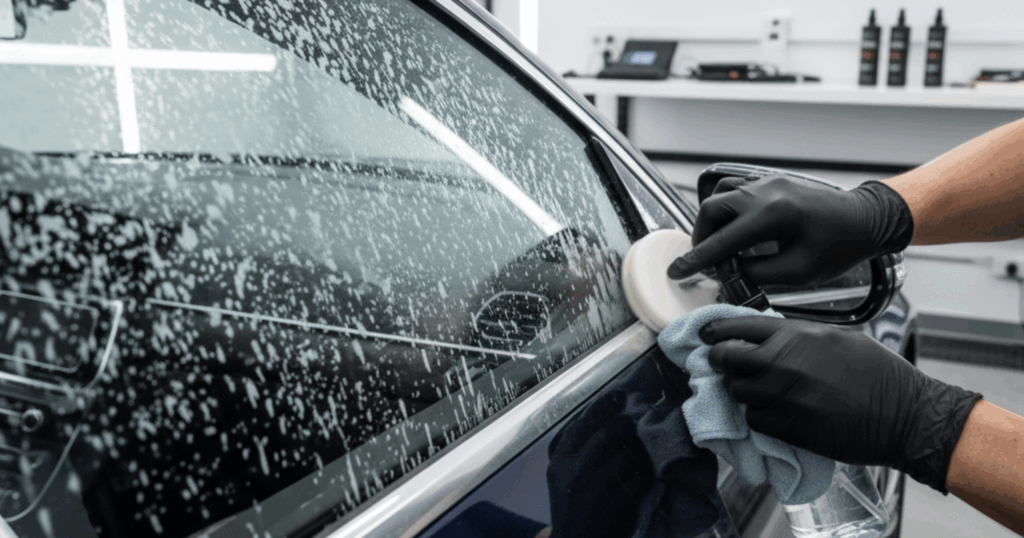
Let’s start with glass because it’s more forgiving than paint. You can use stronger products on glass without worrying about damaging the clear coat. Here’s the step-by-step process that works in Pakistani conditions:
Step 1: Initial Cleaning
Wash the glass with quality car wash shampoo to remove loose dirt and grime. This prevents scratching when you work on the water spots. Use plenty of water and a clean wash mitt. Never wash glass with the same materials you just used on dirty wheels or lower panels.
Step 2: The Vinegar Solution
Mix white vinegar and distilled water in a 50:50 ratio in a spray bottle. For really stubborn spots, you can use straight vinegar. Spray generously on the affected glass and let it sit for 2-3 minutes. The acid in vinegar dissolves mineral deposits chemically. You’ll literally see the cloudiness starting to clear as the vinegar works.
Don’t let the vinegar dry on the surface in our hot climate. If you’re working in direct sunlight, work on one small section at a time. The Lahore or Karachi sun will evaporate the vinegar before it can work if you spray the entire windscreen at once.
Step 3: Agitation
Using a clean microfiber towel, scrub the glass in circular motions. Apply moderate pressure—you’re not trying to scratch the glass, but you do need to remove the dissolved minerals physically. For really stubborn spots, a slightly damp scrubbing sponge works well, but ensure it’s designed for automotive use and won’t scratch.
Step 4: Rinse and Inspect
Rinse thoroughly with clean water—preferably distilled or filtered water if available. Wipe dry immediately with a clean microfiber towel. Inspect your work. If spots remain, repeat the process. Sometimes severely bonded spots need 2-3 treatments.
Step 5: Professional Glass Cleaner
Once water spots are removed, finish with a quality automotive glass cleaner for a crystal-clear finish. This removes any vinegar residue and adds a slight protective coating that helps water sheet off rather than beading and creating new spots.
For Severe Glass Water Spots:
If vinegar doesn’t work, you’re dealing with severely etched spots. Try a dedicated water spot remover or glass polish. These products contain mild abrasives that actually remove a microscopic layer of glass along with the etched minerals. Use sparingly and follow product instructions carefully.
As a last resort before considering glass replacement, professional glass polishing with a machine polisher and cerium oxide compound can remove even deeply etched spots. This is specialized work best left to professional detailers, but it’s cheaper than replacing a windscreen.
How to Remove Water Spots from Car Paint?
Paint requires gentler treatment than glass because you’re working with a clear coat that aggressive chemicals or abrasives can damage. It’s time for you to learn about a safe, effective approach to removing hard water spots from your car.
Step 1: Proper Washing
Start with a complete car wash using quality car wash shampoo. This removes surface dirt and lets you assess the true extent of water spotting. Use the two-bucket method: one bucket with soapy water, one with clean rinse water. This prevents the reintroduction of dirt that can scratch during spot removal.
Work in the shade if possible. In Pakistan’s heat, soap and water dry too quickly in direct sunlight, potentially creating new water spots while you’re trying to remove old ones. Early morning or late evening are ideal times for washing.
Step 2: Clay Bar Treatment
For water spots that survived washing, a clay bar is your next tool. Clay bars remove bonded contaminants, including mineral deposits. Spray a quick detailer as a lubricant (you can also use soapy water in a pinch) and gently rub the clay bar over the spotted area. You’ll initially feel the roughness of the deposits, then the smoothness as they’re removed.
Clay bar treatment is safe for the clear coat when done properly with adequate lubrication. Never use clay on dry paint, and never drop clay on the ground—if it picks up a single grain of sand, it becomes a paint-scratching tool.
Step 3: Vinegar Solution (Use Carefully)
If spots remain after claying, try the vinegar solution: 50:50 white vinegar and distilled water. Spray a small test area first, let it sit for 1-2 minutes, then wipe with a damp microfiber towel. If this works without damaging the paint, proceed to other spotted areas.
Step 4: Polish for Stubborn Spots
If water spots remain, they’re likely etched into the clear coat. These require polishing with a paint polish. Apply a small amount to an applicator pad and work in circular motions over the spotted area. Polish removes a microscopic layer of clear coat along with the etched minerals.
Step 5: Protection is Critical
Once water spots are removed, immediately protect the paint with quality wax or paint sealant. This creates a barrier that makes future water spots easier to remove and helps prevent etching. In Pakistan’s harsh conditions, reapply protection every 2-3 months or after every major monsoon season.
Quality protection products like Meguiar’s wax or Turtle Wax formulations provide water-beading properties that help water roll off rather than sit on the paint and evaporate into spots.
Preventing Water Spots: Better Than Removing Them
Prevention saves hours of removal effort. Here’s how to minimize water spot formation in Pakistan’s challenging conditions:
Drying Strategy: The single most important prevention step is to dry immediately after washing or after exposure to rain. Never let your car air-dry in sunlight. Use a large, quality drying towel or microfiber drying cloth and wipe all surfaces dry immediately after washing.
For large vehicles like Toyota Fortuners or Land Cruisers, a leaf blower works fantastically for clearing water from crevices and speeds up the overall drying process. This might sound excessive, but it’s genuinely effective.
Washing Time: Wash your car in the early morning or evening when temperatures are lower. The cooler air slows evaporation, giving you time to dry the car properly before water spots form. Washing at midday in summer almost guarantees water spots unless you work incredibly quickly.
Washing Location: If possible, wash in the shade. A covered parking area, a building shadow, or even shade from a large tree makes water-spot prevention dramatically easier. If you have no shade, work on one section at a time—wash, then immediately dry that section before moving to the next.
Water Quality: If your area has particularly hard water, consider these options:
- Final rinse with distilled water (expensive but effective for small cars)
- Install a water softener/filter on your hose (one-time investment, ongoing benefits)
- Use a deionizing filter that removes minerals (professional detailer solution)
- Visit the wash facilities that use filtered or softened water
Regular Protection: Maintain wax or sealant on your paint. Protected surfaces repel water better and resist mineral bonding. Water sheets off rather than beading up and evaporating into spots. Reapply protective wax every 2-3 months or after every major rain season.
Parking Considerations: If possible, garage parking protects from rain and morning dew, which can create water spots overnight. If you must park outside, a quality car cover prevents water spot formation during the monsoon season.
Rain Response: After rain, if you can’t wash and dry immediately, at least wipe down glass and horizontal surfaces (hood, roof, trunk) with a damp microfiber towel. This removes most water before minerals concentrate through evaporation.
When to Seek Professional Help
Some water spot situations exceed DIY capabilities. of DIY Here’s when professional detailing makes sense:
Extensive Etching: If large areas of paint show deep etching that hasn’t responded to home treatment, professional machine polishing is needed. Attempting aggressive machine polishing without experience risks burning through the clear coat and causing permanent damage worse than the water spots themselves.
Windscreen Damage: Severely etched windscreens that obstruct vision after cleaning attempts require professional glass polishing or replacement. This isn’t a DIY job—the equipment and techniques are specialized.
Time and Effort: If you’re facing water spots across an entire vehicle and lack time or inclination to spend hours correcting them, professional detailing services cost less than you might expect—often Rs. 3,000-8,000 for complete water spot removal and paint correction, depending on severity and vehicle size.
Professional detailers in major Pakistani cities have specialized tools—dual-action polishers, proper compounds, various pads, and most importantly, experience reading paint and knowing when to stop before causing damage. For serious water spot problems, this expertise is worth paying for.
Common Mistakes to Avoid
Learning from others’ mistakes saves you from repeating them. Here are the most common errors Pakistani car owners make when dealing with water spots:
Mistake 1: Using Dish Soap or Harsh Cleaners
Regular dishwashing liquid is too harsh for automotive paint. It strips wax protection and can dull the clear coat. Always use proper car wash shampoo formulated for automotive finishes.
Mistake 2: Washing in Direct Sunlight
This guarantees water spot formation. The sun accelerates evaporation before you can dry the car properly. Always wash in shade or during cooler parts of the day.
Mistake 3: Using Dirty Towels or Sponges
That towel you used to clean something else? Don’t use it on your car. Dirt particles trapped in towels create scratches as you scrub water spots. Always use clean, dedicated microfiber towels for car care.
Mistake 4: Too Much Pressure
Aggressive scrubbing doesn’t remove water spots faster—it just risks scratching paint. Let chemicals do the work, then wipe gently. Patience beats aggression in car care.
The Role of Quality Products in Water Spot Management
Not all car care products are equal, especially when dealing with Pakistan’s challenging conditions. Here’s why quality matters:
Inferior Products: Cheap, locally made car wash products sometimes contain harsh detergents that can contribute to water spotting by leaving residues. They might clean initially, but create their own problems. Money saved up front is lost to extra correction work later.
Counterfeit Products: Pakistan’s market includes counterfeit versions of popular brands. These fakes don’t contain the same formulations as genuine products and often perform poorly or even damage finishes. Purchase from reputable sellers like Autostore.pk to ensure authenticity.
Professional-Grade Solutions: Brands like Meguiar’s, Turtle Wax, Chemical Guys, Sonax, and Mothers invest heavily in formulation research. Their products are specifically designed for mineral deposit removal while being safe for automotive finishes.
Cost-Effectiveness: A Rs. 3,500 bottle of quality car wash shampoo might seem expensive compared to a Rs. 500 local product. However, the quality product lasts longer (concentrated formula), works better (requires less effort), and protects while cleaning (preventing future problems). Over a year, the premium product often costs less per use.
Understanding the Science: Why These Methods Work
Understanding the chemistry behind water spot removal helps you use techniques more effectively:
How Vinegar Works: Acetic acid in vinegar reacts with calcium carbonate (the primary mineral in water spots) to form calcium acetate, which is water-soluble. This chemical reaction literally dissolves the mineral deposits. The reaction: CaCO₃ + 2CH₃COOH → Ca(CH₃COO)₂ + H₂O + CO₂
The carbon dioxide (CO₂) is what creates tiny bubbles you might see when vinegar contacts heavy mineral deposits. This proves the chemical reaction is occurring.
How Polishing Works: Polishing compounds contain mild abrasives—typically aluminum oxide or similar materials—suspended in oils. These abrasives physically remove a microscopic layer of clear coat along with any etched contamination. Think of it like using fine sandpaper, but at a microscopic level that doesn’t visibly affect the finish.
How Wax Protection Works: Wax creates a hydrophobic (water-repelling) barrier on paint. Water beads up and rolls off rather than spreading flat and evaporating into spots. The wax layer also prevents minerals from directly contacting and bonding with the clear coat, making any spots that do form easier to remove.
Why Immediate Drying Matters: Water spot formation follows a time curve. In the first minutes after water contacts paint, minerals are simply suspended in water on the surface. As evaporation occurs, these minerals concentrate and then bond to the surface. The bonding strength increases with time. Drying within 5-10 minutes prevents bonding entirely. Waiting even an hour allows significant bonding, especially in heat.
Water Spots on Different Paint Colors
Paint color affects both water spot visibility and correction approach:
Black Paint: Shows water spots most prominently. Even minor spots are visible from across a parking lot. However, black paint also shows correction results most dramatically. The effort you invest in removing spots is very visible and rewarding on black vehicles.
White and Silver Paint: Water spots are less visible but still present. These colors hide minor spots, but severe etching still shows. Don’t be fooled into ignoring maintenance just because spots aren’t obvious—the damage is still occurring.
Red, Blue, and Other Colors: Visibility varies by shade. Darker shades show spots more like black paint. Lighter shades are more like white paint. All colors are equally susceptible to damage; only visibility differs.
Metallic and Pearl Paint: These finishes are more complex to correct when severely etched. The metallic flakes or pearl pigments add depth that can be disturbed by aggressive polishing. A conservative approach is essential.
Matte Finishes: If you have matte paint (increasingly popular on modified cars), water spot removal is completely different. Never use polishes or waxes on matte paint. Special matte-specific cleaners and techniques are required. When in doubt, consult professionals for matte finishes.
FAQs: How To Remove Hard Water Spots From a Car
Q: Can I use regular household vinegar for removing water spots from my car, or do I need special automotive products?
Yes, regular white vinegar from any Pakistani grocery store works effectively for water spot removal and costs just Rs. 100-200 per bottle. Mix it 50:50 with water for general use, or use it straight for stubborn spots. However, understand both the benefits and limitations. Vinegar’s acetic acid dissolves calcium and magnesium deposits chemically, which is exactly what you need for water spots. It’s safe for car paint and glass when used correctly—spray it on, let it sit for 2-3 minutes (don’t let it dry in our hot sun), then wipe with a microfiber towel and rinse thoroughly. The limitations are important: vinegar can damage paint if left on too long, especially on hot surfaces, so never spray the entire car and leave it on. The smell is terrible and lingers.
Q: How can I prevent water spots from forming on my car after washing, especially in Pakistan’s hot climate, where water dries so quickly?
Water spot prevention in Pakistan requires adjusting your washing strategy to our challenging climate conditions. The fundamental principle is simple: don’t let water evaporate naturally—ever. Here’s the practical approach that works: First, change when you wash. Never wash at midday in summer when temperatures exceed 35-40°C. Water literally dries on paint before you can rinse soap off, guaranteeing spots. Wash early in the morning (6-8 AM) or in the evening (after 6 PM) when temperatures are 10-15 degrees cooler, giving you actual time to work. If morning or evening washing isn’t possible, work in the shade—under a tree, in a building shadow, or in a covered parking area. For location, create shade if none exists naturally.
Q: Are water spots permanent, or can they always be removed? How do I know if my paint or glass is damaged beyond DIY repair?
Water spots range from temporary surface contamination to permanent structural damage, and identifying which you’re dealing with determines whether DIY removal works or professional help is needed. Freshwater spots that have been on your car for hours to a few days are almost always removable with basic cleaning—they’re just mineral deposits sitting on the surface, not chemically bonded or physically etched.
Final Thoughts
Ignoring water spots has real financial consequences: A car with visible water-spotting on the paint and cloudy glass loses significant resale value. Potential buyers see neglected maintenance and assume other problems exist. Spending Rs. 5,000-10,000 on professional water spot correction before selling can increase your asking price by Rs. 50,000-100,000 or more. Etched paint is compromised paint that would surely want you to know how to remove hard water spots from car. Once the clear coat is damaged by mineral etching, that area is more susceptible to UV damage, oxidation, and further deterioration. What starts as cosmetic spotting can lead to actual clear-coat failure, requiring expensive repainting.
Light water spots take minutes to clean. Moderate bonded spots require an hour of work. Severe etching may require Rs. 8,000-15,000 for professional correction services. The progression is exponential—early intervention saves dramatically.
Be wise and make an informed decision!